Xinhua News Agency, Beijing, February 6 th: The youth changed by rural roads — — The rural struggle road of three post-80 s youths
Remarks: In recent years, the construction of "Four Good Rural Roads" has achieved tangible results, bringing popularity and wealth to rural areas, especially poor areas, and also rallying the hearts of the party at the grassroots level. Not long ago, the General Secretary of the Supreme Leader once again gave important instructions on the construction of "four good rural roads", pointing out that "it is necessary to build rural roads well, but also to manage, protect and operate them well, so as to provide better protection for the broad masses of farmers to get rich and run a well-off life and accelerate the modernization of agriculture and rural areas".
In order to implement the spirit of the instructions, Xinhua News Agency reporters recently went deep into Shanxi, Sichuan, Shandong, Zhejiang and Fujian to interview and investigate the construction of the "four good rural roads", explore the positive exploration and beneficial practice in various places, and show the real sense of gain, happiness and good expectations for the future life of the grassroots.
From the 6th, "Under the guidance of Socialism with Chinese characteristics Thought of the Supreme Leader in the New Era — — The column "New Era, New Meteorology and New Action" takes "Four Good Rural Roads" as the special topic, and continuously broadcasts three investigation reports from the grassroots front line.
Xinhua News Agency reporter Zheng Mingda and Ye Haoming
"If the countryside is to develop, how can it be done without young people!"
Once upon a time, "staying behind" was synonymous with the countryside. Nowadays, driven by the construction of "Four Good Rural Roads", the popularity and wealth of the countryside have come, which has ignited the enthusiasm of many young people to stay in their hometowns and start businesses. Driven by this group of young people, villages are full of new vitality.
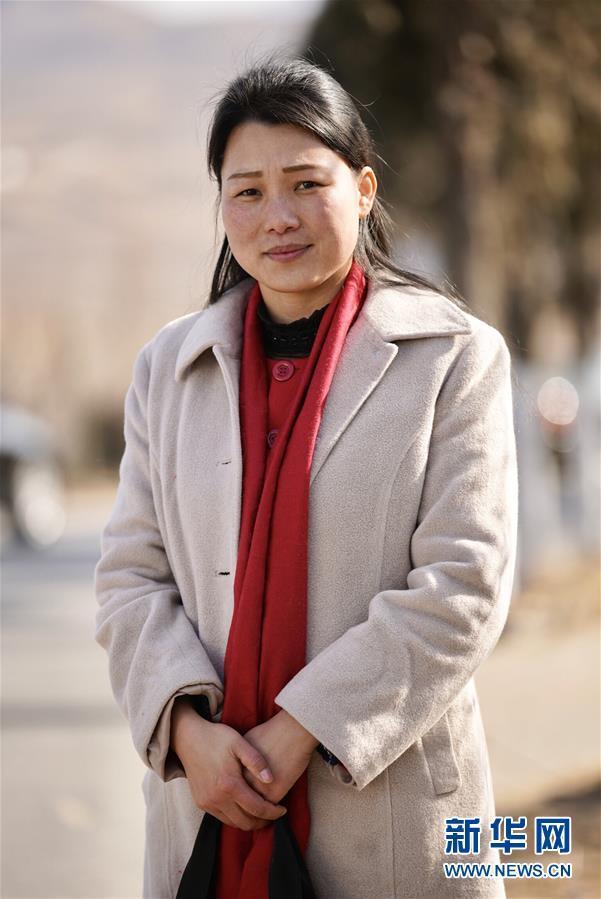
Su Dongmei, a Tibetan youth: Poverty Alleviation Road brings wealth and "talent"
"Seeing the house, crying, looking at the mountain, walking paralyzed" was once a true portrayal of the difficulty of people traveling in Xiaojin County, Aba Tibetan and Qiang Autonomous Prefecture, Sichuan Province.
"Before the road is repaired, it will take a day and a night to go to Chengdu by car. If there is a mudslide or landslide, it may not arrive for two or three days." Su Dongmei, a poverty alleviation cadre in Xiaojin County, said.
Su Dongmei, a 30-year-old native of Xiaojin County, is a childhood memory of her hometown road, where the dust is flying and the rolling stones collapse. "The road is impassable and the education is backward. At that time, all I thought about was going outside."
In 2004, Su Dongmei was admitted to Chengdu University majoring in tourism management. After graduating in 2009, she chose to return to her hometown to become a poverty alleviation cadre. "Reading changes my destiny. I want to use what I have learned outside to let more people receive better education."
Out of the mountains, the road is the key. To Su Dongmei’s delight, the roads in his hometown are constantly improving: in 2014, Xiaojin County completed the hardening of more than 1,400 kilometers of roads; In 2015, the county transit road was completed; In October of the same year, the Balangshan Tunnel was completed. Since then, on the way from Xiaojin County to Chengdu, there is no need to climb over the mountains with an altitude of more than 4,000 meters.
The smoothness of the roads not only makes the local products in the mountains go to a broader market, but also makes the local educational resources improve obviously: brand-new teaching buildings have sprung up, and plastic runways have replaced the original loess road … …
After the road was completed, more volunteers came to Xiaojin County. It is understood that there are currently 120 volunteers in the county, who are distributed in 30 local primary and secondary schools. Like Su Dongmei, they use their knowledge to satisfy children’s thirst for knowledge.
"This road brings wealth, but also ‘ Talent ’ I believe that our education will be better and the future of Xiaojin County will be even better! " Su Dongmei said.
"Female Man" Niu Qinghua: Embark on the Road of E-commerce to Get Rich
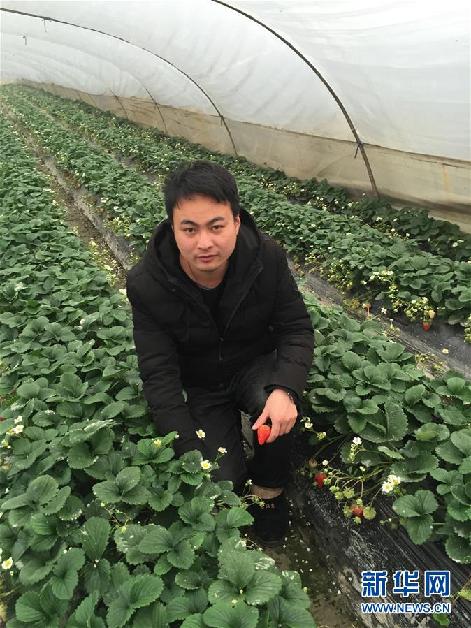
Niu Qinghua will never forget the scene a few years ago: she drove her own chestnut down the mountain with a tricycle, but after the rain, the mud on the mountain road made her fall over on the side of the road with her car and half her calf was crushed under the car. "At that time, I was lying on the ground and thought, when can I walk on the asphalt road!"
Niu Qinghua, 35, lives in Beiyanzi Village, Yedian Town, Mengyin County, Shandong Province. "The four blockages are solid, but the boat and the car are impassable" was once the real situation of local traffic. Before, her husband worked outside to earn money. She managed hundreds of livestock in her hometown, planted nearly 20 acres of orchards, and served the elderly and took care of children, like a "female man".
In order to make local native products go out of the mountainous areas, in recent years, Mengyin County has successively achieved the goal of connecting asphalt roads to villages and buses to villages through the implementation of projects such as "hardening roads to every village" and "village-level highway network demonstration counties". "Hardened roads save transportation costs, improve the sales of fruits, and increase income a lot." Niu Qinghua said.
The change doesn’t stop there. "internet plus" has enabled rural e-commerce to develop rapidly. In 2015, the county organized unified training for rural e-commerce, and Niu Qinghua plunged into the training class and went home very late.
In less than half a year, Niu Qinghua’s "Meng Lianggu Orchard" was launched on Taobao, and she also hired a college student to be responsible for the "decoration" and operation of the store. By the end of last year, the sales of online stores had exceeded 2 million yuan. The store grew bigger and bigger, and her husband came back to start a business together.
In 2016, Niu Qinghua actively responded to the call for poverty alleviation and signed a poverty alleviation agreement with 10 poor households in the village to help them get rid of poverty and become rich through measures such as purchasing fruits and employing workers at high prices.
Niu Qinghua said that building roads has changed her life trajectory. Now, she hopes to let more villagers live a good life through the road of rural e-commerce.
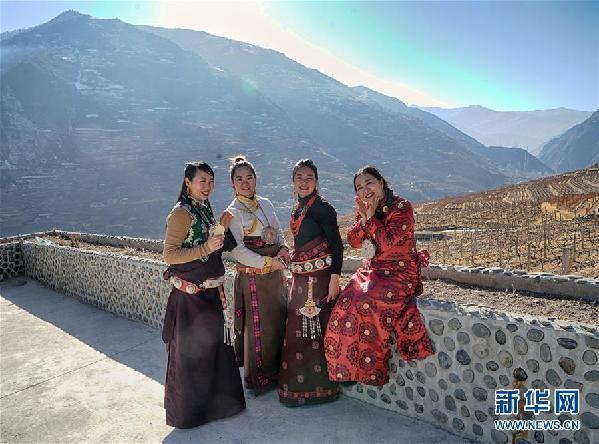
Su Dongmei (first from right) took a group photo with her colleagues at Yinjiadaping Grape Base in Laoying Township, Xiaojin County, Aba Tibetan and Qiang Autonomous Prefecture, Sichuan Province (photo taken on January 24). Xinhua News Agency reporter Cai Yang photo
Bai Wen’s return to his hometown: a good road helps revitalize the road
Bai Jiaming never imagined that his son, who had worked so hard for college, had returned to the village to become a farmer.
Bai Wen, born in 1988, is a native of Lujia Village, Anji County, Zhejiang Province. In 2011, he was admitted to Nanjing Forestry University. After graduation, he engaged in the research of wild fungi in the institute.
When he was admitted to the university and walked out of the village, Bai Wen was most impressed by the dirt road in the village. "All the way is pitted, dusty on sunny days, muddy when it rains, and there is not even a trash can on both sides of the road."
It was that year that Lujia Village began road renovation. In 2013, the asphalt road passing through the village was completed. It was also that year that the family farm was first mentioned in the No.1 document of the Central Committee, and Lujia Village immediately planned to develop the family farm with more than 10,000 mu of low hills and gentle slopes.
Bai Wen was excited by the changes in his hometown. In 2015, he resigned from the institute and transferred 20 mu of land to build Ganoderma lucidum farm, becoming the first local college student to return home to start a business. At present, his farm has invested a total of 1.2 million yuan, with a turnover of 200,000 yuan in 2017.
Today, 18 family farms in Lujia Village are blooming everywhere, and more and more college students are returning home to start businesses. In 2017, Lujia Village’s "Pastoral Lujia" complex project was selected as the pilot project of national pastoral complex construction, which made Bai Wen and his friends see new opportunities.
As the New Year approaches, Bai Wen plans to take the opportunity of young people who are working hard outside to go home for the New Year to discuss the development plan of the village in the next stage. "This is my hometown. I am very proud to have my own world here and to participate in its operation and development." Bai Wen said.