Trees have roots and water is active; People have ancestors and know their origins.
In China, there is an old saying that "three generations are not rich". The main meaning of this sentence is that countless famous families are finally lost in the long river of history, which makes people sigh. But this sentence is not accurate, and there are many families that have been passed down for hundreds of years, and the reason why these families can stand still lies mainly in the cultural heritage.
Any enterprise must have inheritance.
As a country famous for its craftsmanship, Japan has bred many craftsmen. Excellence and meticulousness have become synonymous with them, and their obsession with one thing has become spiritual wealth passed down from generation to generation. When it comes to crafts, many young people nowadays are unwilling to learn. After all, today’s craftsmen have been replaced by the so-called "online celebrity".

Friends who have been to Japan know several places that must be punched in, such as Universal Studios Osaka, Tokyo Disneyland, street signs on Orange Street, and snow scenes in Otaru. These places can be regarded as scenic punch cards at most, and have nothing to do with the craftsman spirit. But some people go to Japan to explore the craftsman spirit that can still be found in today’s times. There are three gods in Japanese cuisine: "Sushi God" Jiro Kikuwabashi, "Tempura God" Saotome Zhezai and "Eel God" Kimben Kanejiro.
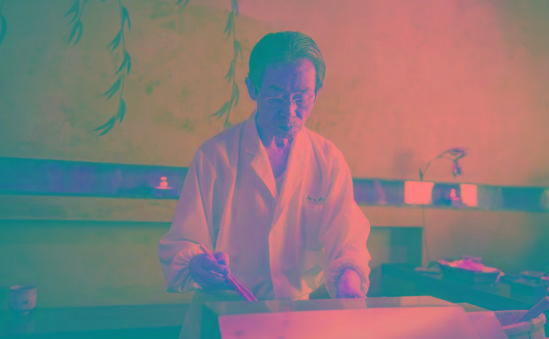
Saotome, the "God of Tempura", is a philosopher. Everyone who has eaten it must know that the ingredients used in this shop are based on the local seasons, and each season has limited ingredients. It can be said that it is not easy to reserve a seat with the inheritance of the master. The diners who are lucky enough to eat in this store have extremely high requirements for the food itself, which happens to be a test of the master’s craftsmanship.

Having said so much, what can be regarded as inheritance? As the saying goes, shine on you is better than Blue. After returning to China, Saotome Zhezai’s eldest disciple also opened a Tempura store, which inherited the master’s craftsmanship and can be described as passing on the culture of Tempura. Therefore, the craftsman spirit is not only reflected in craftsmanship, but the most important thing is the initial heart.
25 years of inheritance, contributing to 1.5 million users in China.
If Japan is a model of ingenuity, then Japanese car companies also have ingenuity, and so does Toyota. This brand has been doing one thing for 25 years, that is, developing dual-engine power.
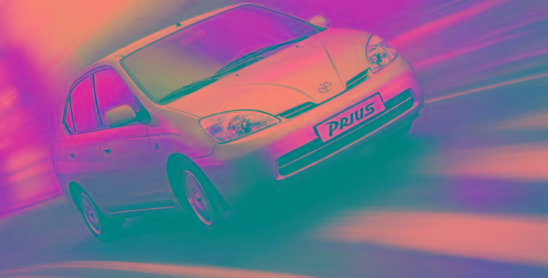
As a car company with early development and wide popularization of new energy technology, Toyota launched the world’s first mass-produced hybrid vehicle "PRIUS Prius" in 1997. In 2005, when the domestic new energy vehicle policy has not been introduced, subsidies have not been implemented, and the awareness of energy conservation and environmental protection of ordinary people has not yet awakened, Toyota has already rolled off the second-generation Prius equipped with THS system in Changchun, which shows its foresight and mobility. Up to now, Toyota has gone through four generations of development in 25 years, and the three technologies of Toyota’s twin engines have also gone through four generations of development. Compared with the original generation, the current hybrid system is smaller in size, stronger in performance, lower in cost, and also improves fuel economy. Although Toyota’s dual-engine technology is very mature, Toyota still focuses on the research and development of dual-engine technology, which coincides with the spirit of Japanese local craftsmen.
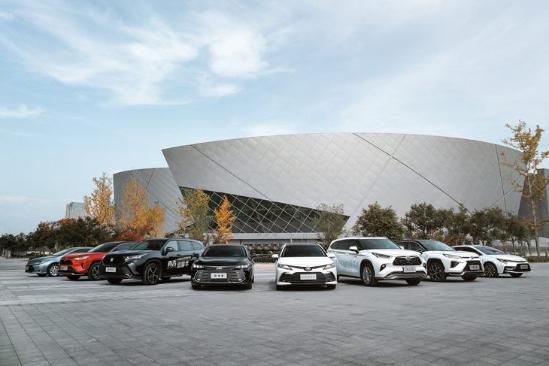
At present, Toyota has 45 HEV products, and its cumulative sales in the world have exceeded 18 million. In China, nearly 7 out of every 10 hybrid cars are Toyota hybrids. The Toyota Twin Engine Family, composed of more than 10 models launched in China, meets the individual needs of different families living under the same roof for four generations. Its high-quality driving experience and fuel economy are enough for it to give full play to its comprehensive strength and become a well-deserved "C-hybrid" in the current wave of energy conservation and new energy.
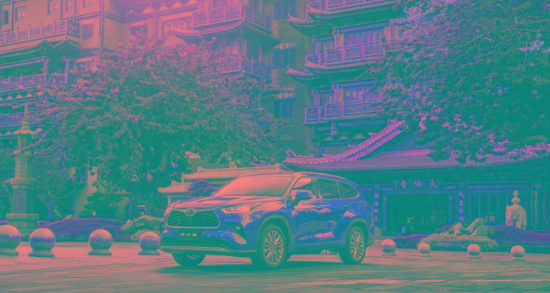
In the past few years, although there is no policy subsidy, the sales of hybrid vehicles in the domestic market have been leaping forward. Hybrid models have become the mainstream choice in the market because of their advantages of low fuel consumption, long battery life and low emissions. Up to now, the sales volume of Toyota Twin Engine in China has exceeded 1.5 million. With its advanced technology, maturity, reliability, fuel saving and environmental protection, Toyota Hybrid has made 1.5 million users a beneficiary, and users have gained word of mouth. At the same time, it also promoted the rapid development of hybrid technologies of other enterprises in the industry, including Honda and BYD. At the annual meeting of China Automotive Engineering Society in 2020, Li Jun, academician of China Academy of Engineering, chairman of China Automotive Engineering Society and professor of Tsinghua University, released the Technology Roadmap for Energy Saving and New Energy Vehicles 2.0 on behalf of China Automotive Engineering Society, which basically defined the development direction and goals in the next 15 years. It is clearly pointed out that by 2035, the automobile industry will realize electrification transformation, all traditional energy-powered passenger cars will be hybrid, and the sales of energy-saving vehicles and new energy vehicles will each account for 50%.
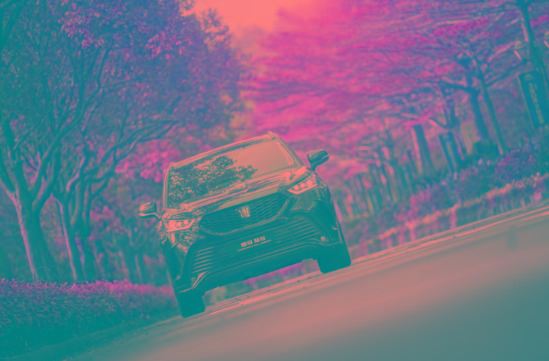
It can be seen that in the 25-year accumulation, Toyota Shuangqing not only has a deep-rooted industry position and reputation, but also occupies a large part of the domestic family car market at present. It is said that "Toyota cars that can’t be broken", in fact, this view is not how strong Toyota cars are, but the failure rate is very low. As a consumable, it has been very successful to achieve the lowest failure rate within a limited range of use. Toyota twin-engine models are widely circulated in the industry for their high quality and durability in daily use. Japanese journalist Kiichiro Yokota once set a feat of driving the Prius across five continents. During the 12-year driving across five continents, he experienced the tests of various harsh environments such as the American jungle, the Sahara desert and the Qinghai-Tibet Plateau, and did not encounter any major faults and problems, which proved the superiority of Toyota’s hybrid technology in terms of power and reliability.
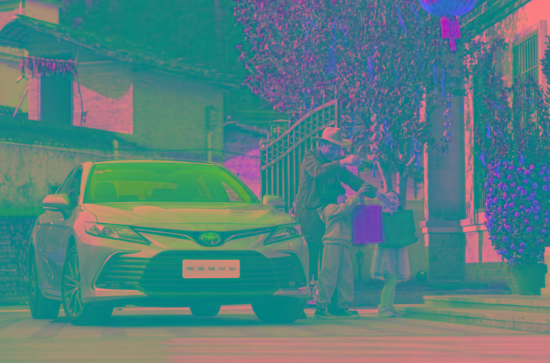
Today’s Toyota, if the dual-engine technology is the main theme, it must be inseparable from the blessing of TNGA architecture. The TNGA architecture is not only another innovation of Toyota’s lean production, but also a perfect inheritance of Toyota’s philosophy of making "better cars" for consumers. Thanks to the blessing of TNGA architecture, the low center of gravity, 15% improvement in power performance, 20% improvement in fuel efficiency and optimization cost have been put into research and development again. The models under TNGA architecture have good maneuverability, and with the dual-engine technology, it can be said that Toyota’s new cars on sale will not be absent from the dual-engine technology, which is also the essence of the inheritance of Toyota’s entire brand.

As the first choice for family cars, Toyota’s twin-engine models can meet any car demand of three generations, ranging from high-end Erffa twin-engine and Wilfa twin-engine to people-friendly Corolla twin-engine and Ralink twin-engine, and the price ranges from 150,000 to 800,000. Erffa and Highlander double engines can not only give high-quality travel experience, but also meet the large space demand for family cars and travel for home use. At the same time, their power, smoothness and fuel economy have become a new definition of higher driving experience. Corolla twin engines, Ralink twin engines, etc., meet the first choice of young consumers’ first car, with low cost, high endurance, high durability and comfort, and also allow young people to take into account the cost of car use and high-quality driving experience, killing two birds with one stone.
Write at the end:
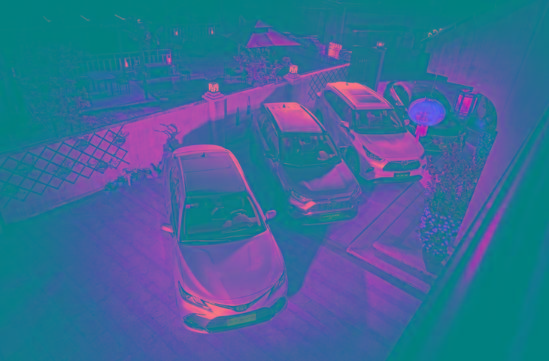
Home is a harbor for people to take shelter from the wind, and the family belongs to the roots of a big family. A dish, a cup of tea and a word can reflect the cultural heritage of a home. In fact, inheritance is not only about persistence and perseverance, but also about the concentration of one thing. After 25 years, Toyota has continuously improved the dual-engine technology, thus gaining the recognition of 1.5 million car owners in China. This persistence explains what the craftsman spirit is.