How to do hospital cost accounting based on DRG payment system?

Source: Tongji Accounting Medical Management New World Author: Dai Xiaozhe

abstract:  

Based on the analysis of the influence of DRG package payment on hospital cost accounting, taking tongji hospital as an example, this paper introduces the hospital’s experience in carrying out cost accounting under DRG payment system according to the requirements of promoting DRG pilot, including: design of cost accounting implementation scheme, basic data governance (unified classification information of cost categories, establishment of bottom data of cost elements, requirements of cost data integration), data modeling of income analysis, modeling of cost accounting rules, and analysis of DRG composition cost, which can be used as a reference for all localities to carry out DRG payment.

    
Diagnosis Related Groups (DRG) is a combination classification scheme that classifies patients into several diagnosis groups according to the clinical characteristics such as hospitalization days, major diagnosis, minor diagnosis, complications, complications, surgical operation, disease severity and prognosis, resource consumption, and social characteristics such as patients’ age and gender.

DRG pays to divide the cases with similar clinical process and similar resource consumption into the same DRG group, and calculates the cost standard of each DRG group in combination with evidence-based medicine, and provides the hospital with a fixed advance payment for acute inpatients in groups. The Guiding Opinions of the General Office of the State Council on Further Deepening the Reform of the Payment Method of Basic Medical Insurance (Guo Ban Fa [2017] No.55) puts forward: "The state has selected some areas to carry out pilot payment by DRG, explore the establishment of a DRG payment system, and mainly pay for inpatient medical services by DRG."

The Notice on Printing and Distributing the List of National Pilot Cities Paying by Groups Related to Disease Diagnosis (No.34 [2019] of Medical Insurance) points out: "The 30 national pilot cities paying for DRG should complete the tasks of each stage according to the idea of’ top-level design, simulation test and actual payment’ to ensure the simulation operation in 2020 and start the actual payment in 2021.

On the basis of uniformly using the codes of disease diagnosis, surgical operation, drugs, medical consumables and medical services formulated by the state, improve the DRG payment information system and handle the data interface with the hospital. "Notice of National Pilot Technical Specification and Grouping Scheme for Payment of Disease Diagnosis Related Grouping (DRG) (No.36 [2019] of Medical Insurance Office) published the Technical Specification for Grouping and Payment of National Medical Insurance DRG and the Grouping Scheme of National Medical Insurance DRG(CHS-DRG), and the top-level design of DRG in China was basically completed.

The unification of DRG payment for medical insurance in hospitals across the country indicates that the payment mode of hospitals will be mainly based on project payment and mainly based on DRG payment. The 2020 National Medical Security Work Conference emphasized that the DRG pilot should be further promoted in 2020. "Opinions of the Central Committee of the Communist Party of China and the State Council on Deepening the Reform of Medical Security System" points out: "Promote the payment in groups related to disease diagnosis". Based on the practice of tongji hospital, this paper discusses the cost accounting under DRG payment, which can be used as a reference for other places to carry out DRG payment.

Part 1

Influence of DRG payment on hospital cost accounting

The core idea of DRG case classification scheme is to group cases with the same characteristics in one respect, and the classification is based on the patient’s diagnosis. On this basis, the influence of factors such as patient’s age, operation or not, complications and complications is considered, and the hospital’s treatment of patients is related to the expenses incurred, which provides a basis for the formulation of fixed payment standards for each group through scientific calculation.

Based on the idea of case-mix, the scheme comprehensively considers the individual characteristics of cases, divides cases with similar clinical processes and similar resource consumption into the same group, adjusts the risk of each group, gives relative weight, and establishes a structured patient grouping coding system and standardized evaluation indicators, thus reflecting the output, efficiency and quality of medical services.

Under the DRG payment system, considering the complexity of patients’ illness, each case in each disease group has similar clinical characteristics and consumes similar medical resources, the cost of each disease group is calculated according to a certain cost-cost ratio, and the rates of various diseases are formulated with reference to the pricing principle of public utility products. Each DRG corresponds to a cost weight calculated according to the average treatment cost of patients. With a unified cost accounting method, we can master the cost of treating diseases and formulate a reasonable fixed payment standard for hospitals. The cost analysis of DRG patients can standardize the output of medical services and make the clinical characteristics and cost consumption characteristics of patients in the same group more comparable.
 1. Paying by DRG exerts external pressure on hospitals to control operating costs.

According to the DRG payment system, a fixed payment standard is set for each DRG group, and the complicated and random medical payment process is standardized, and the payer no longer pays according to the actual cost of the patient’s hospitalization (that is, medical service items). After the main diagnosis and treatment methods of inpatients are determined, the hospital can know in advance the standard of fees that can be charged to patients or paid by medical insurance.

The fixed rate for specific diseases set in advance is calculated according to the treatment cost of similar diseases. Although it will be adjusted appropriately due to institutional planning, nature and regional differences, it will not change or loosen due to the actual cost of the hospital. Under the constraint of the hard budget of prepaid rate, service providers must consciously implement diagnosis and treatment in the most efficient way in order to obtain income higher than the social average.

If the hospital conducts diagnosis and treatment at a cost less than the charging standard, the difference will form an institutional balance of income and expenditure. On the contrary, if the treatment cost is higher than the established rate, the hospital will suffer economic losses. The basic logic of paying by DRG is that the medical insurance income obtained by the hospital is certain for specific patients and treatment methods, but to increase the medical surplus, the hospital should start from the cost under refined management.

DRG payment divides inpatients into a certain number of disease groups according to their clinical similarity and resource consumption similarity, determines service units based on the information on the front page of medical records, calculates the cost rate of each service unit in combination with cost drivers, calculates the average cost of each disease group according to the expenses incurred by each unit and the cost rate, and formulates the prepayments for medical expenses according to the groups.

When designing the DRG payment system, the price standard of packaged payment was determined, which extended the focus of supervision from front-end medical service items, selection of drugs and medical consumables and price control to medical safety, quality and effect, and mobilized the enthusiasm of hospitals and medical staff to improve medical safety, quality and control costs, reduce waste and expand the balance by using the payment economic lever of fixed price and retained balance.

Paying by DRG will transfer the economic risks in medical activities from patients to hospitals. In order to make profits, hospitals must improve medical quality and operating efficiency by shortening hospitalization days, reducing induced medical treatment and strengthening standard clinical pathway, and bear the pressure of operating costs.
 
2. Payment according to DRG has proved to be effective in controlling hospitalization expenses in various countries.

The United States, Australia, Germany, France and other countries have formulated their own DRG versions, defined the grouping, coding, cost and price scheme of DRG, and carried out payment practice. As a widely used payment method for acute inpatients in the world, DRG has been incorporated into the domestic payment system as an important hospital payment method in more than half of the countries of the Organization for Economic Cooperation and Development (OECD).

The main expected purposes of introducing DRG in various countries are: to improve the transparency of medical services, to facilitate hospitals and medical insurance to monitor medical consumption, and to identify efficient services; Encourage efficient and low-cost medical behavior and encourage efficient use of resources. Practice shows that paying by DRG is effective in controlling hospitalization expenses.

Since October 1983, the United States has adopted the DRG prepayment system in the hospitalization service of Medicare, setting a fixed compensation standard for acute inpatients, and paying a fixed fee to the hospital according to the diagnosis and classification of the patients when they are admitted to the hospital, instead of paying the fee according to the number of days of hospitalization or the specific medical services they receive in the hospital. No matter how many times the patients check their equipment in the hospital and what services they receive during their hospitalization, the hospital will get the same compensation.

If the patient stays in hospital for a long time or uses expensive services, the hospital can’t get compensation. Because of the cost risk, the hospital is put under certain financial pressure by medical insurance, and the budget constraint is greater when treating patients, thus reducing unnecessary examination and medication, reducing medical expenses, shortening the average hospitalization days and improving medical quality.

The reform of payment mode in China, which takes DRG payment as the breakthrough point, aims to pay with the pre-set quota of the same group of cases, so that drugs, consumables, examinations and tests become the cost of treating diseases, rather than the source of hospital income, so as to stimulate hospitals to actively control costs, eliminate the profit-seeking tendency of income from selling drugs, consumables and examinations, abide by the technical specifications and operational specifications of clinical diagnosis and treatment, and obtain medical insurance through appropriate technology and drugs, treatment due to illness, reasonable examination, rational drug use and reasonable diagnosis and treatment.
3, according to the DRG pricing payment need to formulate the corresponding hospital cost accounting rules.

"Basic Guidelines for Cost Accounting of Public Institutions" (Cai Shui [2019] No.25) points out: "In order to meet the demand for service prices or charging standards, units can take service as the cost accounting object. Specific guidelines for hospital industry cost accounting shall be formulated by the Ministry of Finance in accordance with these guidelines. " The Interim Measures for Cost Accounting of Public Hospitals (Draft for Comment) issued in May 2020 put forward: "Hospitals should accurately calculate the cost of medical services and provide basis and reference for government pricing agencies and relevant units to formulate relevant prices or charging standards.

DRG cost accounting is a process of collecting, distributing and calculating DRG cost by activity-based costing and superposition method, which is based on factors such as patients’ age, sex, hospitalization days, clinical diagnosis, symptoms, surgery, disease severity, complications and outcomes, and divides patients into several disease diagnosis related groups. Standardize the classification of medical service charges, and the medical service charges promulgated by local government departments should be classified according to the medical income stipulated in the government accounting system, and at the same time classified according to the charging category on the first page of medical records.

DRG cost accounting is a process that takes DRG groups as the accounting object, collects related expenses according to a certain process and method (cost-expense ratio method or medical service item superposition method) and calculates the average cost of each group. After the reform of DRG payment mode, the hospital is faced with the following changes: the charging and payment policies have changed, the income-generating model has changed (scientifically controlling fees and increasing the balance), the medical insurance audit and reimbursement process has changed, and the pricing unit has changed (by item into groups).

Focusing on the principles of unified grouping, unified coding and unified cost accounting standards, learning from the successful experience of DRG payment in typical countries is the key to popularize DRG payment in combination with China’s national conditions. At the national level, a unified hospital cost accounting standard is issued to clarify the quality requirements of hospital cost data, which lays a good foundation for collecting comparable cost data, following the principle of similarity in resource consumption, improving the accuracy of DRG grouping and building a national cost database supporting DRG payment.

Part 2

Design of DRG payment implementation scheme

The basic conditions for implementing DRG payment in hospitals include: unified disease diagnosis coding and surgical operation coding, up-to-standard medical record quality, relatively standardized diagnosis and treatment process, interconnected information systems, capable management team and sound cooperation mechanism. The implementation process of DRG payment includes environmental investigation and preparation in advance, establishment of working groups (expense and cost accounting group, DRG expert group, supporting policy development group, system construction support group, communication and coordination support group, etc.), unified interface specification, standardized medical record home page, standardized diagnosis, clear coding requirements, data extraction (cleaning, standardization, Measurement weight, rate-related indicators, etc.), training, scheme formulation, system transformation, information collection, demand document formation, system design (medical insurance fund settlement list, grouping device, settlement system, management monitoring system), system operation (simulation, optimization and trial operation), daily maintenance and quality control of the first page of medical records.

Among them, data collection and integration, the establishment of project implementation team, basic data management, revenue analysis data modeling, cost accounting rules modeling, and the establishment of breakeven analysis model are the prerequisites for cost accounting. According to the national pilot requirements of DRG payment, referring to the National Pilot Work Plan of Payment by Disease Diagnosis Related Grouping (DRG) of Wuhan Basic Medical Insurance (No.1 [2019] of Wuyi Medical Service), tongji hospital summed up the experience of full-cost accounting in departments, formulated the implementation plan of DRG payment in hospitals, defined the project objectives, and guided relevant departments to follow the expected objectives, time schedule and key tasks in each stage. Strengthen the informatization and standardization of data collection such as clinical medical records and fees, promote the first page information and data management of medical records, and calculate the relevant indicators of DRG grouping, start the cost accounting of projects and diseases, and promote the refined management and quality connotation development of hospitals.

The start-up of DRG prepayment reform should adhere to the high-level lead, multi-sectoral coordination, high-level lead in reform implementation and collaborative participation of stakeholders, which has an important impact on the implementation and promotion of reform. The hospital set up a cost accounting leading group headed by the president, with the chief accountant and the vice president in charge of finance as the deputy heads. The members include the heads of medical, nursing, medical record, information, medical insurance, statistics, finance, price and other departments, and are responsible for project management (see Table 1).
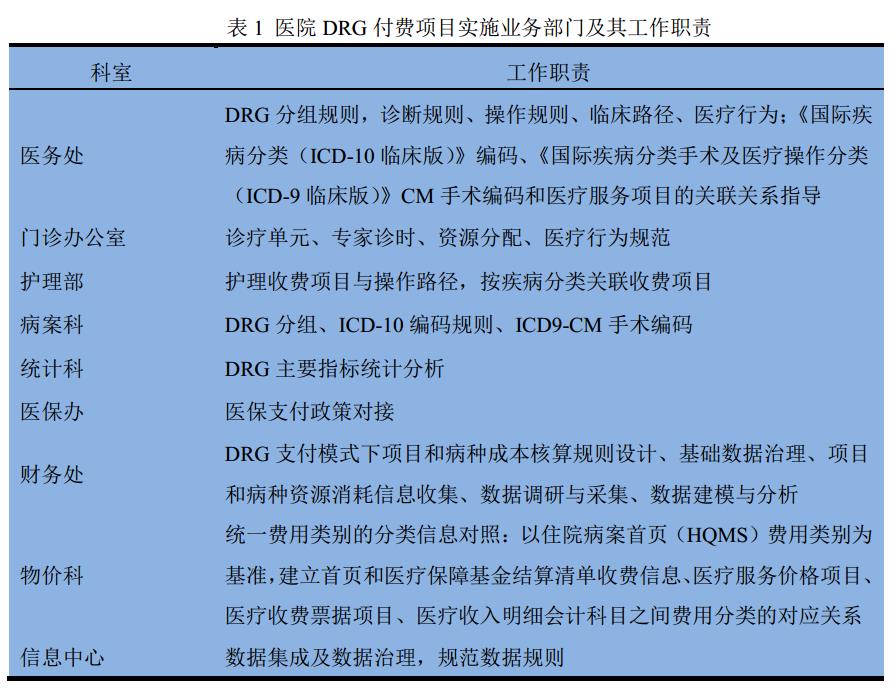
Set up an expert group of DRG payment business, which is composed of clinical medical experts, medical technology experts, nursing experts, medical record management experts, price management experts, etc., to guide the accounting of medical service project cost, disease cost and DRG cost, confirm the medical service process and corresponding health resource consumption parameters, and ensure the convergence of accounting objects, accounting services and medical services.

The software company is mainly responsible for data integration, data cleaning, data analysis, DRG cost analysis, project and disease cost accounting software development, department cost information investigation, project disease resource consumption information collection, etc. The output objectives of DRG paid projects include:

(1) Analysis of department income based on patient expenses: analysis of department income, project income, DRG income and medical group income in the last year, dynamic analysis and monitoring of DRG expense consumption, and combing and monitoring the details of high-frequency surgery or operation charges in the last year by using big data.

(2) The analysis of project and disease composition: the cost accounting and analysis of last year’s project, DRG grouping cost accounting and analysis, and disease cost accounting and analysis.

(3) Profit and loss analysis: the profit and loss analysis of medical services in the hospital, clinical departments and medical technology departments last year, the profit and loss analysis of DRG group in the hospital, and the comparison of DRG group’s cost consumption with the provincial average; Profit and loss analysis of diseases in the whole hospital, and profit and loss analysis of internal services such as laundry and disinfection fees in medical auxiliary departments such as laundry room and supply room

Part 3

Practice of hospital cost accounting under DRG payment system

When hospitals conduct cost accounting under the DRG payment system, according to the principle of "who benefits, who bears", they collect and allocate various costs and expenses, so as to match each medical income with the costs and expenses for obtaining corresponding income, so as to determine the profit and loss of projects, diseases and DRG groups. When the hospital takes the medical service items stipulated in the unified charging standard as the cost accounting object, the data collection is refined to the items that can be charged separately, and the detailed data such as material consumption and depreciation occurred in the department during the project accounting period are collected according to the source of funds.

When the DRG group is taken as the cost accounting object, the cost is collected and the labor cost, material cost and drug cost consumed by medical services for various diseases are accounted. Cost accounting data collection includes: income data integration and analysis, cost data integration and analysis, and basic data needed for cost accounting are collected according to the standard path. According to the requirements of government accounting system, collect detailed data of outpatient and inpatient medical income.
1. Basic data governance of cost accounting
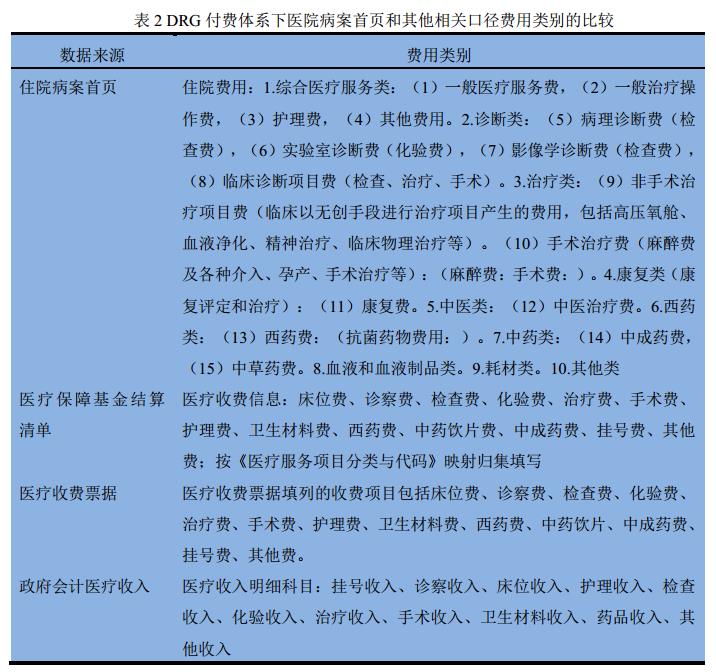
The basic data management of cost accounting includes: (1) unifying the classified information of expense categories, and establishing the corresponding relationship among expense categories on the first page of medical records, medical insurance settlement list, medical receipt list and accounting income subjects, so as to facilitate the collection of medical income data according to clinicians, execution units and medical service items. (2) Classification of medical service projects, which are divided into general projects and specialized projects in the whole hospital. (3) Cleaning of sanitary material warehouse, medicine warehouse, equipment warehouse and personnel warehouse, etc.


1.1 Unified classification information of expense categories
 
     
 Different versions of medical service price items are implemented in different places, which are mainly divided into two versions: National Medical Service Price Item Specification (2001 Edition) and National Medical Service Price Item Specification (2012 Edition). The current medical service charge category will gradually transition to the category of National Medical Service Price Item Specification (2012 Edition). The first page of medical record contains all the information needed to implement DRG, and the cost classification is one of the basic data of DRG payment.

The Notice of the Office of the State Medical Insurance Bureau on Printing and Distributing the Specification for Filling in the Settlement List of the Medical Insurance Fund (No.20 [2020] of the Medical Insurance Office) points out: "The filling in the settlement list of the medical insurance should accurately reflect the information such as the diagnosis and treatment of patients and medical charges. Among them, the diagnosis and treatment information data mainly comes from the home page data of hospitalization medical records, and the index caliber of medical charge information data is consistent with the unified medical hospitalization bill information of the Ministry of Finance, the National Health and Wellness Commission and the National Medical Insurance Bureau. "

As a patient grouping scheme based on information related to diagnosis and treatment, DRG is based on the home page data of hospital medical records and its related disease classification and coding standards for diagnosis and treatment. The standardization of medical charging items and cost items and the consistency of data bases among hospitals can enhance the comparability of charging and cost among similar hospitals [10].

Uniform fee categories, The purpose is to refer to the Notice of the Ministry of Health on Revising the Home Page of Hospitalization Medical Records (Wei Yi Zheng Fa [2011] No.84), the National Medical Service Price Project Specification (2012 Edition), and the Notice on Comprehensively Implementing the Management Reform of Electronic Bills for Medical Charges (Caizong [2019] No.29). Notice on Printing and Distributing Supplementary Provisions and Cohesive Provisions for Hospital Implementation of Government Accounting System-Accounting Subjects and Statements of Administrative Institutions (Cai Shui [2018] No.24), Notice on Printing and Distributing National Pilot Technical Specifications and Grouping Scheme for Disease Diagnosis Related Grouping (DRG] No.36), The Notice of the State Medical Insurance Bureau on Printing and Distributing the Coding Rules and Methods of Medical Insurance Designated Medical Institutions and Other Information Services (No.55 [2019] of the Medical Insurance Bureau) and the Notice of the Office of the State Medical Insurance Bureau on Printing and Distributing the Settlement List of the Medical Insurance Fund (No.20 [2020] of the Medical Insurance Bureau), and the comparative relationship between the medical record home page and the medical service price items, medical insurance fund settlement list, charging bills and income subjects is established, so as to realize the inter-hospital comparison.


  1.2 the underlying data construction of cost elements
 
     
Hospital resource consumption is divided into human resource consumption, tangible assets such as buildings, equipment, materials and products, intangible assets such as application software and other expenses according to cost factors. The underlying data of cost elements include:

(1) Personnel database: including accounting unit (department), medical group, job number, personnel name, personnel title and personnel salary. Clear personnel positioning rules, according to the project, disease collection personnel who play the corresponding role. For multi-role personnel who serve multiple accounting units in the same accounting period, their labor costs are shared among service departments according to attendance and workload, and allocated to relevant disease groups according to the working hours of participating in the disease groups.

(2) Material warehouse: including accounting unit, material name, quantity to be collected, material unit price, material total price, and whether it is chargeable material (in a certain department, a material is defined as chargeable material or non-chargeable material; The materials charged for a certain project can automatically correspond to the project).

Cleaning of sanitary materials warehouse, including cleaning of sanitary materials catalogue warehouse, classifies and accounts sanitary materials according to factors such as pricing and non-pricing charges, high value and low value, disposable and recyclable use. Establish the classification rules of chargeable and non-chargeable sanitary materials, the corresponding relationship between materials allowed to be charged separately and medical service items (classify disposable medical consumables according to the categories of medical service items, including disposable medical materials for examination of diagnostic operation items, disposable medical materials for surgery and interventional operation, disposable medical materials for treatment in non-surgical treatment, traditional Chinese medicine or clinical physical therapy and rehabilitation items), and the corresponding relationship between materials and DRG group, and collect the income of materials that can be charged separately according to clinicians and execution units.

Establish the corresponding relationship between the charging items of sanitary materials and the material code, so as to write off the cost of sanitary materials of different materials, different patients (diseases) and different accounting units according to the benefit principle. The charging rules of medical consumables that can be charged separately are complicated, including "one-to-one" charging, charging at the same price according to different product specifications, packaging charging, and group charging. It is a necessary basic work to carry out the fine management of the whole process of charging medical consumables, carry out the associated query of DRG patients’ expense list, consumables and medical service items, and realize the matching of consumables dictionary and HIS charging items in the material management system.

(3) Drug library: including accounting unit, drug name, quantity collected, drug unit price, and drug total price (required for disease cost and DRG cost accounting). Collect drug income data according to drug quality regulations, outpatient service and hospitalization, accounting unit and billing doctor.

(4) Asset library: including accounting unit, name of fixed assets (intangible assets), original value of assets, depreciation (amortization) years and depreciation expense (amortization expense of intangible assets). Establish the corresponding relationship between medical service items and medical equipment, and make statistics on the workload and income of large-scale equipment inspection according to date, specialty (ward), patient, equipment number, inspection fees and technicians. After the charging items of medical services correspond to the large-scale medical equipment, the list of DRG patients’ fees and medical services will be jointly checked.

(5) Project library: including the classification of all price charging items in the hospital:

① The first dimension: distinguish between general medical services and specialized medical services. According to the types and cases of medical service price items, the types of medical service items carried out by clinical departments can be classified and counted as "general items of the whole hospital (items commonly used by multiple departments, such as comprehensive medical services, physical therapy and rehabilitation items)" and "specialist items", so that all medical costs can be reasonably shared and the costs of departments and single items can be accurately calculated. Understand the development of departmental projects, monitor the charging dynamics, and increase the proportion of medical income. Sort out departments to carry out disease-related projects, monitor income, and tap operational potential.

② The second dimension: it is divided into items that need equipment and materials, and items that don’t need equipment and materials (such as bed fee, heating and cooling fee, registration fee, oxygen fee, etc.).

(6)HIS data: including accounting unit, patient’s hospitalization number, detailed list of all patients’ charges in the hospital, and hospitalization days.

(7)DRG grouping: including time consumption index and expense consumption index of chief physician, deputy chief physician and patient.

(8) Hand anesthesia system data: including operation name (ICD-10 or ICD9-CM), corresponding charging items, patient’s hospitalization number, operation duration, operator, anesthetist, instrument nurse and visiting nurse.

1.3 clear cost data integration requirements
For cost data, it is necessary to find the relationship between personnel, materials, drugs, assets, medical record home page, surgical anesthesia, HIS, DRG grouping and other system-related data, establish data corresponding rules, and integrate data.

(1) Rules for integration, allocation and accounting of labor costs. Personnel orientation: ① the relationship between employees and accounting unit and medical group; ② The level of accounting of inpatient departments: individual-medical group-ward-specialist-hospital area. ③ Accounting level of outpatient department: individual-specialist-hospital area. ④ The corresponding relationship between medical service items and human resources consumption.

(2) Accounting rules for cost integration and allocation of sanitary materials. Clarify the relationship between chargeable sanitary materials and DRG group, and the relationship between non-chargeable materials and medical service items or DRG group.

(3) The integration, allocation and accounting rules of equipment depreciation, and the corresponding relationship between special equipment and medical services.

(4) The integration, allocation and accounting rules of other operating costs, and the corresponding relationship between cost accounting subjects and medical service items.

(5) Rules for cost integration, allocation and accounting of operation items such as surgery and treatment. For operation items such as surgery and treatment, try to record and account the operation cost according to the top medical service items with the highest fees in each specialty.

(6) The rules of cost integration, allocation and accounting of DRG group, establishing the corresponding relationship between DRG group and medical service project, and accounting the DRG composition according to the project cost accounting results.
2. Cost analysis data modeling
Cost analysis data modeling includes:
 (1) Revenue analysis of medical services in the whole hospital: visual data display and information associated query.

(2) Revenue analysis of medical service items in departments: visual data display and information associated query, and optimized display forms according to the requirements of departments.

(3) Income analysis of high-frequency surgery: visual data display and information associated query.

(4) Analysis of charging operation after price dynamic adjustment: visual data display and information associated query.

(5) Cost analysis of DRG group in the whole hospital: visual data display and information associated query.

(6) Comparison of DRG expenses and payment standards in the whole hospital: visual data display and information associated query. Analyze the differences in payment and charges of various disease groups in the hospital, do a good job in the analysis and monitoring of the disease structure in the hospital, and rationally plan the disease revenue and expenditure structure according to the medical insurance payment policy.

(7) Comparison between DRG expenses of departments and payment standards: visual data display, information associated query and department feedback. According to the comparison between the average expenses of each DRG group in each department last year and the average expenses of the same group of data in the province, analyze and predict the impact of DRG payment on hospital income, and assist departments to adjust and optimize the disease structure. The average cost of each DRG group can reflect the degree of disease difficulty and resource consumption to a certain extent.

(8) Standardized charging template for diseases: establish a charging template for diseases based on big data, and implant feasible schemes into the information system after investigating and soliciting opinions from departments.
3, cost accounting rules and knowledge base construction
DRG cost accounting generally adopts the superposition method of medical service items and drug and material costs. Therefore, the accuracy of medical service project cost accounting determines the fineness of DRG cost accounting, and the construction of project cost accounting rule knowledge base is very important. According to the cost attribute and business type, and according to the relationship between input and output, we classify and model the project cost accounting rules:

(1) Activity-based Costing Accounting Model: Through the method of "field investigation", the standardized operation is investigated in departments and organized into an operation library. According to the operation motivation, the resource consumption of each operation (such as labor hours, equipment hours, single material consumption, etc.) is combed and recorded, and the related costs of medical service project execution departments are reasonably shared. This rule is generally applicable to inspection items, operation items such as surgery and treatment with high degree of standardization.

(2) Cost coefficient proportional method model: On the basis of department cost accounting, according to the resource consumption motivation, rules such as income distribution coefficient, personnel proportion coefficient, occupied area proportion coefficient, working hours coefficient and workload coefficient can be set to share the public cost of the whole hospital or execute the department cost. This rule is generally applicable to medical services generally carried out in the whole hospital, such as bed fees, nursing fees, examination fees, etc. Project cost accounting rules are greatly influenced by diagnosis and treatment habits and management fineness, so it is necessary to consider the combination of standardized configuration and mobile configuration in the construction of knowledge base.
4. DRG component cost analysis
      
The cost analysis report mainly includes DRG grouping schedule, cost structure table, profit and loss analysis table, profit and loss sorting analysis table and so on. Using the cost accounting results, according to the needs of different managers, it provides them with visual breakeven analysis views of the whole hospital, departments, medical groups and DRG groups. From the aspects of the hospital as a whole, different departments in the same disease group, different disease groups in the same department, and different doctors (groups) in the same disease group, aiming at the composition and change of expenses, the departments, doctors (groups) and disease groups with unreasonable expenses were found by using structural analysis, trend analysis and factor analysis.

The results of cost accounting can be applied to the pricing of medical services, and the medical security department will take the average cost of the hospital as an important basis for pricing when setting the charging price of DRG patients. Hospitals can accurately analyze the reasonable pricing range and cost structure changes of disease components through horizontal and vertical comparisons between hospitals and disease groups, actively participate in medical insurance negotiation, and also provide accurate basis for intelligent supervision of medical insurance.

It is helpful for government departments and hospital managers to know the actual situation of resource consumption in providing medical services by carrying out cost analysis to determine the business volume and total guaranteed income of breakeven point in the normal development of medical services, so as to provide reference for building a scientific and reasonable medical service pricing and dynamic adjustment mechanism, reasonably compensating medical costs (price charge compensation, government financial classification compensation, medical insurance fund compensation, and optimizing resource allocation) and improving resource utilization efficiency.
In a word, the characteristic of DRG payment is that its pricing is related to the clinical diagnosis of each case, but not directly related to the actual cost of the case. Under the DRG payment system, hospitals are compensated and paid at a fixed price, which encourages hospitals to provide medical services at a cost lower than the fixed price economically and keeps the difference between the fixed price and the cost. The difference below the payment amount forms the surplus of the hospital, and the part above the payment amount forms the loss borne by the hospital. If the hospital’s cost accounting is not perfect, the cost and cost information are incomplete and inaccurate, it will increase the risk of the hospital’s operating cost paid by DRG.

The actual medical expenses of some disease groups are higher than those paid by medical insurance DRG group. After DRG payment is implemented, the hospitalization income of these disease groups will be reduced. When hospitals are faced with fixed prices, it is necessary to minimize the cost of treating patients. According to different case combinations, the hospital accepts compensation, prompting the hospital to provide the most effective service according to the payment requirements of DRG. DRG price can not only promote the hospital to improve its internal efficiency, but also enable the hospital to make use of economies of scale in service supply.

Carrying out DRG cost accounting is the requirement of promoting the reform of DRG payment method and promoting the hospital to actively control costs. After paying by DRG, the hospital’s income becomes quantitative, and it is necessary to make a breakthrough in cost control to obtain surplus. Only by finding out the treatment cost of each DRG can we make clear the direction of operation and management and provide data support for hospital decision-making.

Cost accounting personnel should change the previous concept of cost accounting, comprehensively sort out the cost accounting items, refine the indirect cost allocation parameters, and objectively reflect the cost status of drugs, consumables, medical technology, nursing and management for each patient and each DRG group. DRG cost accounting is a long-term and arduous task, and it is the cornerstone of promoting hospital fine management, which requires good cooperation between hospital cost management related departments and clinical departments.

The steady promotion and continuous exploration of DRG cost accounting can make a set of accounting standards, improve internal management, establish a set of standardized procedures, cultivate a high-quality team, actively apply the new situation of medical insurance purchase service, improve cost awareness, standardize diagnosis and treatment behavior, and rationally allocate medical resources.

Follow-up research can make statistical analysis of big data, evaluate the pilot work, form an evaluation report of DRG effect, and give suggestions for improving accounting work in the next step. With the deepening of the pilot, DRG cost accounting will be more comprehensive, accurate and mature in future exploration and practice.

The author introduces:
Dai Xiaozhe, deputy director of tongji hospital Finance Department affiliated to Tongji Medical College of Huazhong University of Science and Technology, is a senior accountant. National accounting leader, economic management leader of the National Health and Wellness Commission, cooperative researcher of the Institute of Government Accounting of Zhongnan University of Economics and Law, and part-time teacher of the School of Medicine and Health Management of Huazhong University of Science and Technology. He has published many articles in core journals such as chinese health economics, Medicine and Society, and undertaken many research work by the Ministry of Finance, the Finance Department of the National Health and Family Planning Commission, and the Medical Accounting Society of china health economics association and China. He has won the third prize of scientific and technological progress in Hubei Province, the second prize of scientific and technological innovation in China Hospital Association, and his achievements have been appraised as advanced in China. A number of research work won the title of excellent bidding subject in china health economics association.


 -THE END- 

Sogou browser 1.3 public beta version realizes "whole network acceleration"

  Since its launch, Sogou browser has been widely praised by users for its high-speed and stable acceleration function of education network. In the 1.3 public beta version released this time, Sogou browser has made persistent efforts while optimizing the acceleration function of education network, and realized the function of "whole network acceleration" for the first time after "education network acceleration", expanding the coverage of network acceleration function from education network to all domestic mainstream operator networks (Netcom/Telecom/Education Network).

Software name: Sogou browser Software version: 1.3 public beta version Software size: 2586k Software authorization: be free of charge Applicable platform: Win9X Win2000 WinXP Win2003 Vista Download address: Click to download sogou browser

  Because of the bandwidth bottleneck between China’s two major fixed-line operators (Netcom/Telecom), the slow exchange of visits between Netcom and Telecom has been called "an Internet problem with China characteristics" for a long time. Faced with this chronic disease, which has existed for about ten years, sogou proposed and realized the solutions of "breaking the bandwidth limit between networks" and "accelerating the whole network" with the attitude of solving practical problems for Internet users.

Start to accelerate
Figure 1 Turn on "Full Network Acceleration" 

  Users who use proxy servers to surf the Internet cannot use "whole network acceleration" for the time being.

Whole network acceleration
Fig. 2 The proxy "Full Network Acceleration" cannot be started.

  The whole network acceleration function of Sogou browser can increase the speed of China Netcom’s telecom exchange visits by 20%-50% on average, and the acceleration effect is more obvious for some websites with only one export (pure Netcom/pure telecom websites). After actual measurement in various network environments, most local and professional forums perform well in the acceleration effect measurement as a whole.

  At the same time, the acceleration function between the public network (Netcom/Telecom) and the education network is still effective, which can obviously improve the access speed by 2-5 times.

  In view of the misjudgment of acceleration caused by various network complex factors, we have realized the "self-learning" mechanism of automatic analysis of acceleration effect and self-improvement of acceleration strategy, so that the acceleration function can become more and more effective and accurate with the continuous use of users.

Sogou browser 1.3 beta version
Figure 3 Sogou browser 1.3 public beta interface

  Sogou browser 1.3 beta update log:

  1. New functions

  Upgrade the function of "Education Network Acceleration" to "Network Acceleration (Netcom/Telecom/Education Network)";

  * When CNC users visit telecom sites or telecom users visit CNC sites, the access speed can be increased by 20%-50%;

  * Education network users access to the public network, and the acceleration function of public network users’ access to the education network is still effective, which can obviously improve the access speed by 2-5 times.

  2. Functional improvement

  According to the feedback from the forum users and the results of the test report, the recognition ability of the education network lines is further improved, and the acceleration effect is optimized.

  Optimize the use strategy of IE local cache, which can significantly improve the page loading speed for frequently visited websites; For forums and other types of websites, the effect is more obvious. (New in the third edition of the preview)

  Optimize the acceleration function of the whole network, increase the "self-learning" judgment mechanism, and judge whether the website needs to be accelerated more intelligently. (New in the third edition of the preview)

  3. Bug fixing (fixed some feedback concentration problems, the main problems are as follows)

  Fixed the problem that uploading large attachments may lead to disconnection after opening the acceleration function of education network.

  Fixed the problem of blank screen when extracting the "Happy Farm" game from the intranet to a separate window.

  Fixed the problem that the handle may leak after switching the whole network acceleration function for many times. (New in the third edition of the preview)

CPC Central Commission for Discipline Inspection: The first-in-command violates the law and is prone to chain reaction and even collapse.

  BEIJING, Nov. 23 (Xinhua)-Ma Senshu, director of the Regulation Office of the Central Commission for Discipline Inspection, recently made a guest interview on the CPC Central Commission for Discipline Inspection website to interpret the Regulations on Inner-Party Supervision in the Communist Party of China (CPC). He said that top leaders at all levels play a key role in promoting the cause of the party and the state. At the same time, the behavior of leading cadres has a leading role, and the top leaders who violate the law and discipline are most likely to have a catalytic and chain reaction, and even cause regional, systematic and collapsed corruption.

  Ma Senshu introduced that party constitution’s general program clearly pointed out that it is necessary to "strengthen supervision over the leading organs of the Party and leading cadres in party member, especially leading cadres". The guidelines and regulations all emphasize that to strengthen and standardize the political life within the party and strengthen inner-party supervision, we must start with leading cadres, especially senior cadres.

  Ma Senshu introduced that the general regulations clearly stipulate that the key targets of inner-party supervision are the party’s leading organs and leading cadres, especially the main leading cadres. The responsibilities and systems stipulated in other chapters are designed around supervising the top leaders, which not only makes the top leaders’ decision-making, employment and personal matters more open and transparent through organizational and institutional innovation; Moreover, more supervision probes are set up, and attention should be paid to finding clues from patrol supervision, discipline review, audit and justice, letters and visits and reports, so as to make them under the supervision of party organizations, party member and the masses.

  He introduced that in the relevant provisions, it is also required to strengthen the supervision of the main leaders of party organizations and leading cadres in key positions, focusing on supervising their political stance, strengthening party building, strictly administering the party, and implementing party resolutions, selecting and employing people fairly and honestly, and being honest and self-disciplined.

  The higher-level party organizations are mainly responsible for the lower-level party organizations, and they usually ask more questions and remind them, and correct problems in time when they are found. If members of the leading group find that the main person in charge has serious problems, they should raise them in time. The personal matters related to the main person in charge of the party organization should be made public in a certain range within the party and take the initiative to accept supervision.

Dongfeng Warrior 917 Highland Lion Hard Core is listed, with an official price of 699,000.

Cross-country peak, high tide. On November 15th, 2024, the 22nd Guangzhou International Automobile Exhibition was grandly opened. As a luxury electric off-road brand in China, Dongfeng Technology unveiled five heavy-duty models, including a new off-road species-Dongfeng, a long-wearing weapon specially tailored for heavy off-road enthusiasts-Dongfeng Warrior 917 Highland Lion, a million-level high-end customized luxury electric off-road vehicle-Dongfeng Star Chariot, a global mobile luxury electric off-road vehicle-Dongfeng Warrior 917 Jiaolong Armor, and a co-creation version of Dongfeng Warrior 917 Knife Peak in China. With a strong product matrix, Dongfeng Warrior Technology booth has become the focus of attention, further demonstrating its profound accomplishments in the field of luxury electric off-road.

At the event site, Dongfeng Warrior Technology officially released the "Warrior Off-road Ecological High-definition Platform", which integrates four modules: Warrior original vehicle modification, Warrior high-luxury joint customization vehicle, Warrior quality modification kit and Warrior personalized off-road ecosystem. This platform further enriches users’ personalized choices, so that every "warrior" can build his own car.

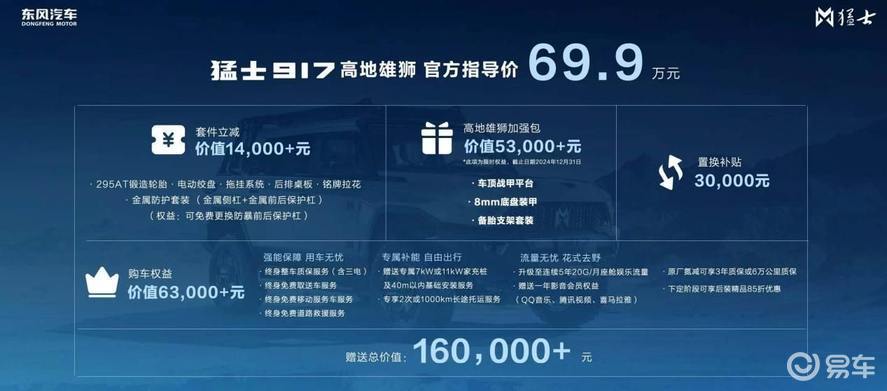
Dongfeng Warrior 917 Highland Lion was officially listed, and the official guide price was 699,000 yuan. Users who decide before December 31, 2024 will get a set of off-road reinforcement packages with a total value of more than 53,000 yuan for free. In addition, all car buyers can enjoy eight free rights, the original factory nitrogen minus three years warranty or 60,000 kilometers warranty, and a 15% discount on the high-quality products installed on the platform of Warrior Gaoding. At the same time, users who buy cars now can also enjoy a replacement subsidy of 30,000 yuan. The comprehensive preferential value exceeds 160,000 yuan.

Create an exclusive car, and the warrior cross-country ecological high-definition platform is officially launched.

As the first luxury electric off-road vehicle brand in China, Warrior has successfully created a new era of "one car with thousands of faces" for off-road vehicles in China with the high-end customized service of "one car with one price, one person with one car". Cao Dongjie, general manager of Dongfeng Warrior Technology, said: "Build cars for users and build dream cars. The needs of users are the direction of the warrior’s efforts. In order to meet the personalized customization needs of users’ continuous upgrading and build the strongest modified ecology of China off-road vehicles, today, we officially launched the warrior off-road ecological high-definition platform. "

Warrior cross-country ecological high-definition platform includes four sections: warrior original vehicle modification, warrior high-luxury joint customized vehicle, warrior quality modification kit and warrior personalized cross-country ecological circle.

"Warrior Original Vehicle Modification" provides customized vehicle solutions for users’ modification needs in different usage scenarios, and users no longer need to spend a lot of time and energy on modification. At present, the Warriors have launched four official reform suits: weekend, desert falcon, wilderness city and highland lion.

"Warrior High Luxury Co-branded Customized Vehicle" perfectly combines luxury and off-road, and jointly launches a number of eye-catching vehicle products with the world’s top high luxury customized brands. Including the M800 Star Chariot of Dongfeng Warrior jointly built with the world’s top refitted brand Rolex, and the first film co-branded vehicle of China-Dongfeng Warrior 917 Dragon Armor jointly launched with Bona Film, which not only shows the profound knowledge of the Warrior in the cross-country field, but also demonstrates its strong strength in cooperation with top international brands.

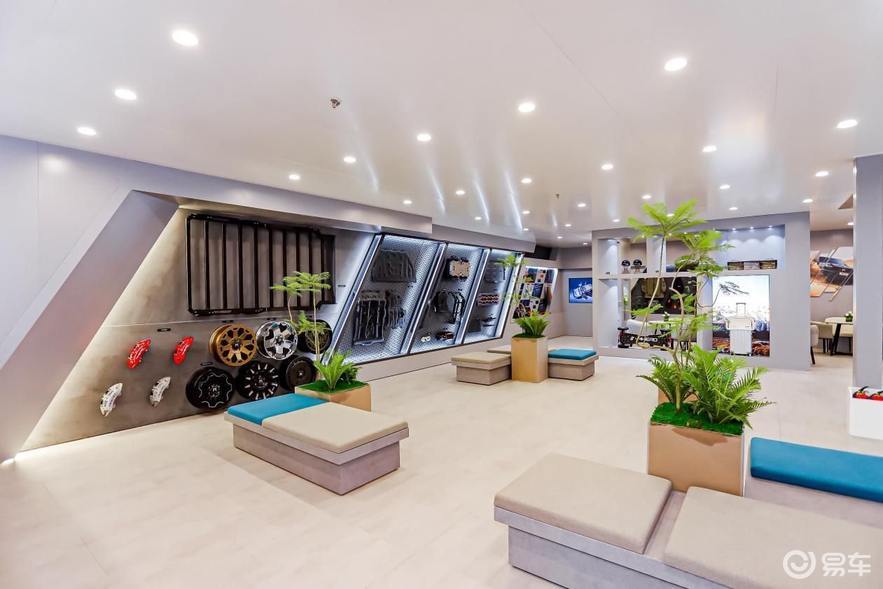
In order to meet the diverse needs of users, Dongfeng Warrior Technology has prepared a "Warrior Quality Modification Kit" for users. The equipment library covers 6 categories, more than 180 off-road equipment and modification kits, covering all kinds of scenes from daily commuting to extreme off-road. At present, the warrior’s equipment library is still expanding.

"Warrior Personality Off-road Ecosphere" not only allows users to enjoy the professional guidance and ultimate experience brought by the exclusive off-road research institute and off-road experience park, but also participate in colorful off-road experience activities such as Four Seasons Road Book and Weekend Road Book. At the same time, it is also an open and co-creation ecology, which provides opportunities for partners in the industry and modification enthusiasts.

At the event site, a co-creation and modification work-Dongfeng Warrior 917 Knife Peak China Co-creation Edition, brought by China, a well-known cross-country club in China, was also displayed, which showed the warrior users’ love for cross-country and modification.

Wearing sharp weapons across the world, Dongfeng Warrior 917 highland lion hard core listed.

"Dongfeng Warrior 917 Highland Lion, as a long-wearing weapon for heavy off-road enthusiasts, is the first original nitrogen-reduced luxury electric off-road vehicle in China, which can meet the needs of heavy off-road enthusiasts for long-wearing vehicles in one stop, and take China luxury off-road to a new level with super protective ability, strong power output and global access to off-road performance. It will surely accompany more warriors of the times who are interested in all directions, gallop great rivers and mountains and enjoy a happy life." Wang Jiong, deputy general manager and chief brand officer of Dongfeng Warriors Technology, said.

Extremely reliable security fortress, full of security protection ability. Dongfeng Warrior 917 Highland Lion has indestructible "customized armor" and comes standard with 360 metal protective cover, including front and rear metal bumper made of 5 mm aluminum-magnesium alloy and carbon steel side bar, which provides hard core protection while giving consideration to lightweight; Made of aluminum-magnesium alloy with a thickness of 8mm, unique in China, it provides solid protection for the chassis and can calmly face gravel roads, bullet holes or rock roads.

Dongfeng Warrior 917 Highland Lion uses the design structure of Warrior military vehicle for reference, and adopts super-strong endoskeleton body design. The high-strength steel of the body accounts for more than 70%, and the roof can bear more than 11 tons of heavy pressure. Even if it encounters the most extreme external impact, it can ensure the integrity of the passenger compartment.

The performance beast of the wilderness will take you to conquer the unexplored territory. Dongfeng Warrior 917 is equipped with MEGA POWER, the world’s first electric drive assembly with integrated differential lock and two-speed gearbox, which can produce 816 horsepower and 11,592 Nm of rim torque in generate. At the same time, the car is also equipped with front and rear differential locks+mortise and tenon locks, which can realize off-road full-time four-wheel drive control, 100% mechanical locking and hard-core three locks to help users "get out of trouble in seconds".

The brave fighters flying close to the ground can easily handle all the long-wearing scenes. Dongfeng Warrior 917 Highland Lion is equipped with the first nitrogen shock absorber based on the forward development of high-end electric off-road vehicle in China, which makes every journey smooth. The nitrogen shock absorber is equipped with the industry-leading DPS bottom valve technology and the 3.0-diameter oil storage barrel with oil-gas separation adopted for the first time in China. It has the characteristics of large damping span, quick response, outstanding road following performance and so on. It can also realize 8-speed adjustment, which not only takes into account urban travel, but also allows you to wear it freely. The maximum load also reaches 4.2 tons, and it also has stronger impact resistance, and it can land smoothly when reloading the flying slope.

Thanks to the intelligent chassis blessed by MORA, the warrior off-road platform, and the warrior all-terrain system M ATS, Dongfeng Warrior 917 Highland Lion has five off-road driving modes and intelligent off-road AUTO modes, which can intelligently identify and conquer nine typical off-road terrains, and even novices can change off-road old guns in seconds. In addition, the Dongfeng Warrior 917 Highland Lion is also equipped with industry-leading rear wheel follow-up steering technology, and the active steering angle of the rear wheel reaches 21.2 in both directions, ranking first among all luxury brands on sale. At the same time, the minimum turning radius of the whole vehicle is only 5.1 meters, which effectively improves the agility of the vehicle in the long-wearing scene, and can quickly turn around even on narrow mountain roads.

Send it to heaven and earth, and cover mountains and rivers in Wan Li. With its leading technical strength, powerful product matrix and innovative off-road ecological platform, Dongfeng Warrior Technology has set a new benchmark for the industry and led China luxury electric off-road to a new development height. In the future, Dongfeng Warrior Technology will continue to uphold the brand concept of "fearless conquest" and join more "warriors" to cross mountains and seas, read extraordinary things and enjoy life.

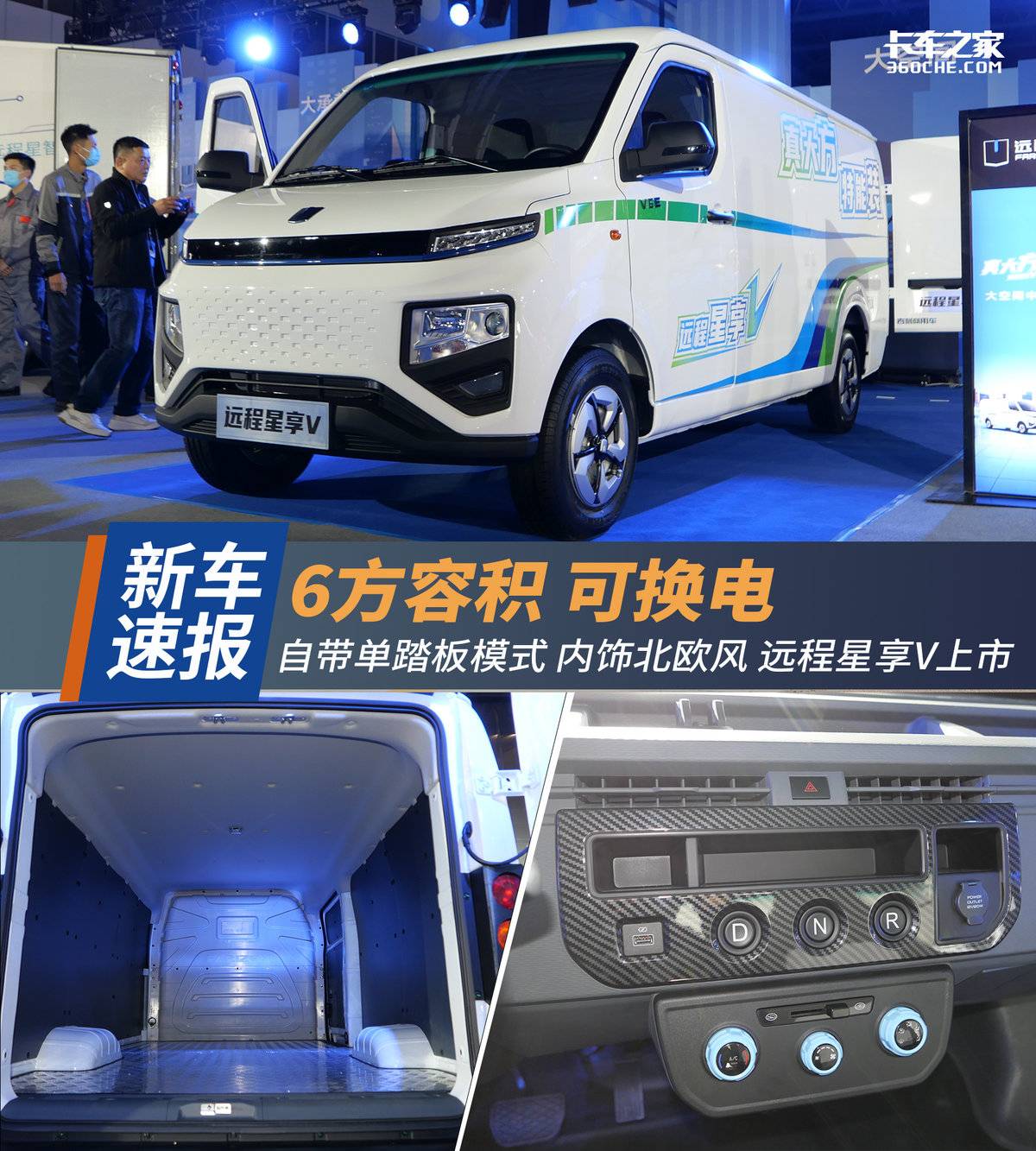
6-square volume with single pedal mode Star Enjoy V Interior is very Nordic.

6-square volume with single pedal mode Star Enjoy V Interior is very Nordic.

[Original of Truck House] As the main model of urban distribution and small-scale transportation, van cargo has always been the main force of urban freight transportation, which has attracted the attention of many card friends. Compared with Hehe, the smaller body can shuttle through the streets and alleys of the city very conveniently.

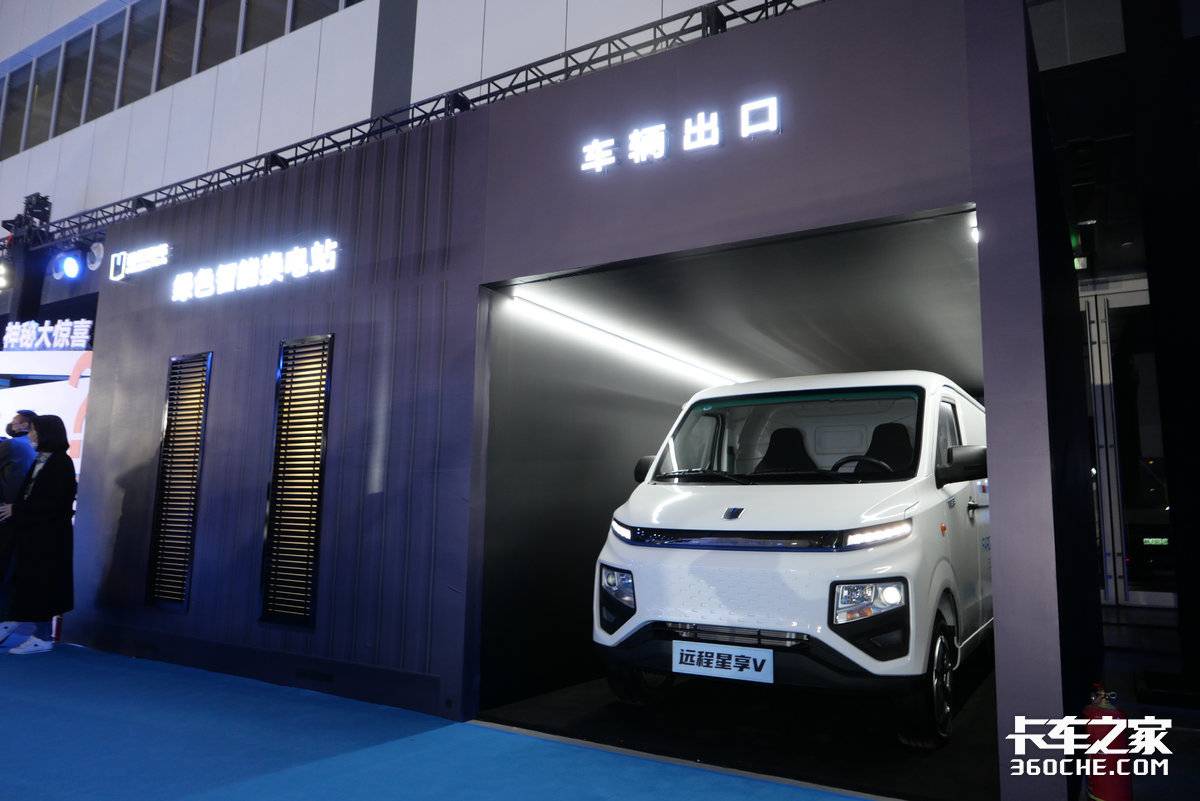
As a big automobile manufacturer, Geely Group has been deeply involved in the China market for many years, and it can be said that it is familiar with the domestic user demand and car environment. A few days ago, at the V product launch conference of Remote Auto, Remote Auto launched two brand-new models, Star Enjoy E and Remote Star Enjoy V6E.

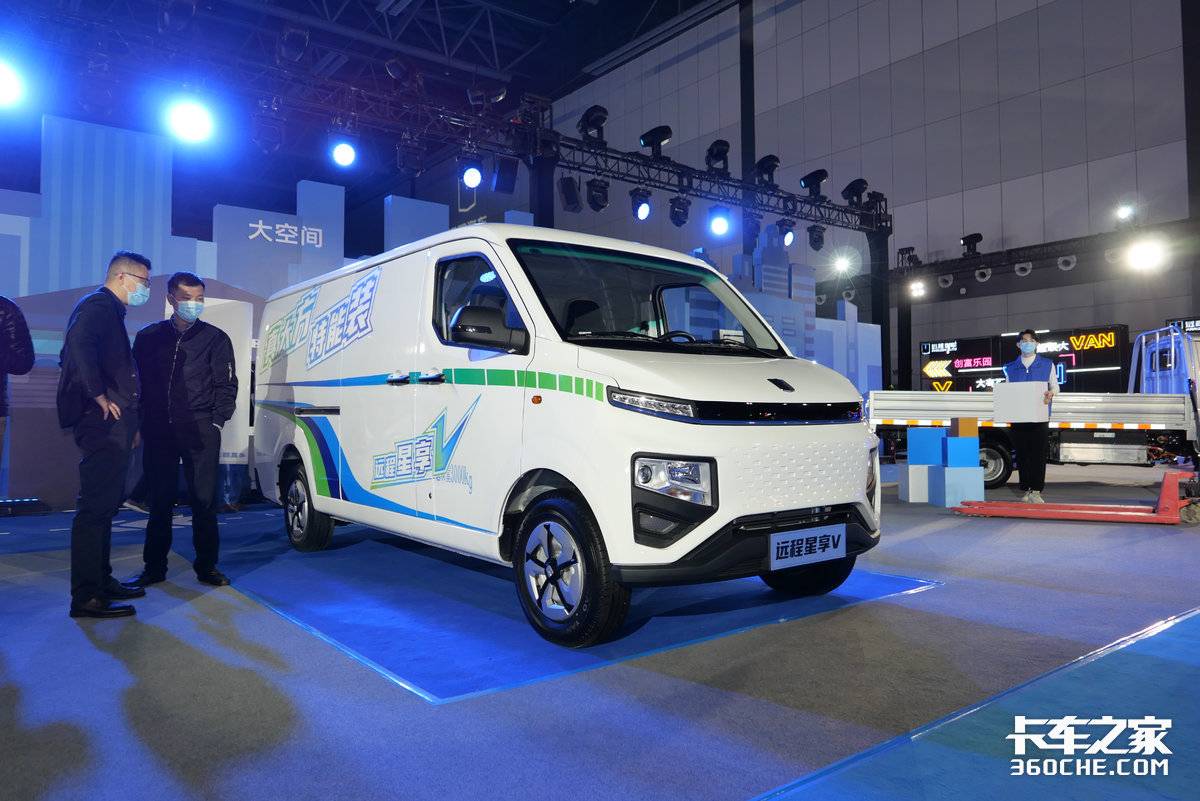
Remote Star Enjoy V5E and Remote Star Enjoy V6E are both closed vans, and the main difference lies in the size and length of the van.

6-square volume with single pedal mode Star Enjoy V Interior is very Nordic.

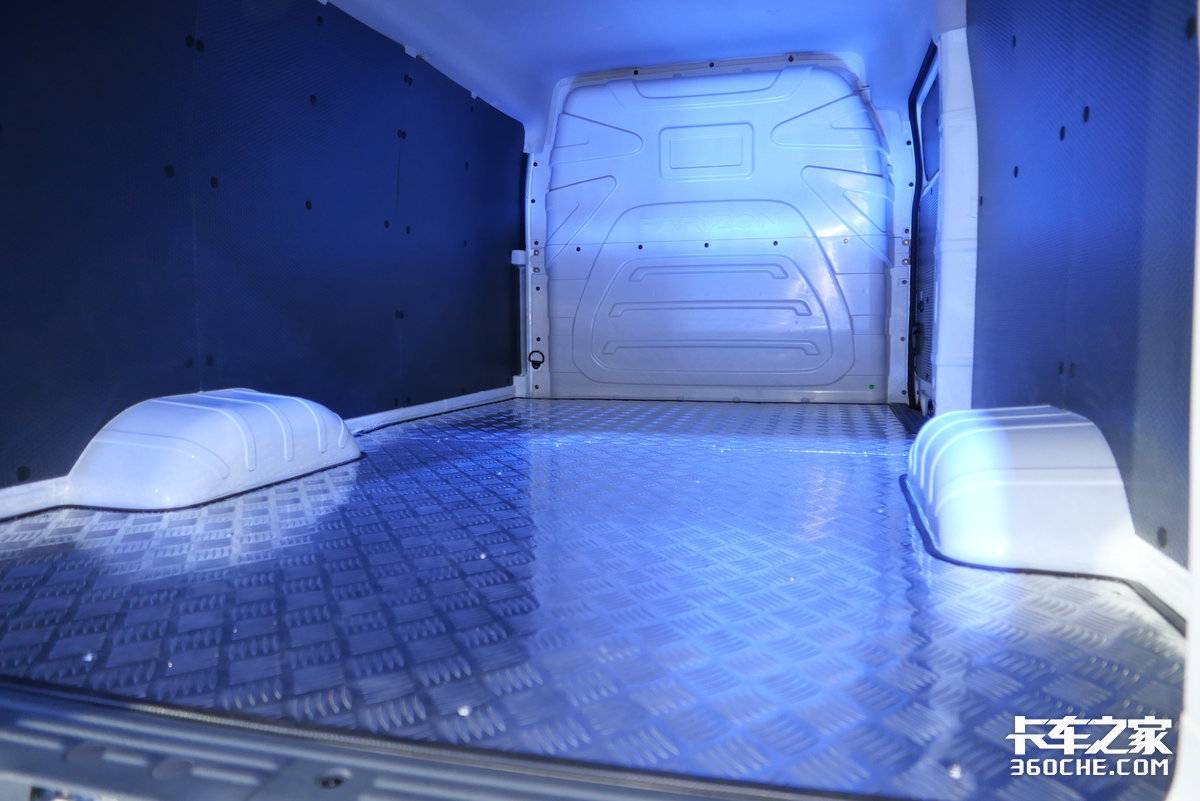
Among them, the Xingxiang V5E is a 4m 5 model, with a vehicle size of 4540×1730×1985(mm) and a cargo compartment size of 2495×1600×1320/1270(mm) (with a roof).

Xingxiang V6E is a 4m-8 vehicle with a vehicle size of 4845×1730×1985(mm) and a cargo compartment size of 2800×1600×1320/1270(mm) (with a roof).

6-square volume with single pedal mode Star Enjoy V Interior is very Nordic.

As the highlight of the whole vehicle, the inner width of the cargo compartment and the inner width of the wheel bag of Xingxiang V5E and V6E reach 1.6 meter and 1180mm, which is the top level of products of the same level, wider and flatter, and meets the shipping needs of all kinds of goods.

6-square volume with single pedal mode Star Enjoy V Interior is very Nordic.

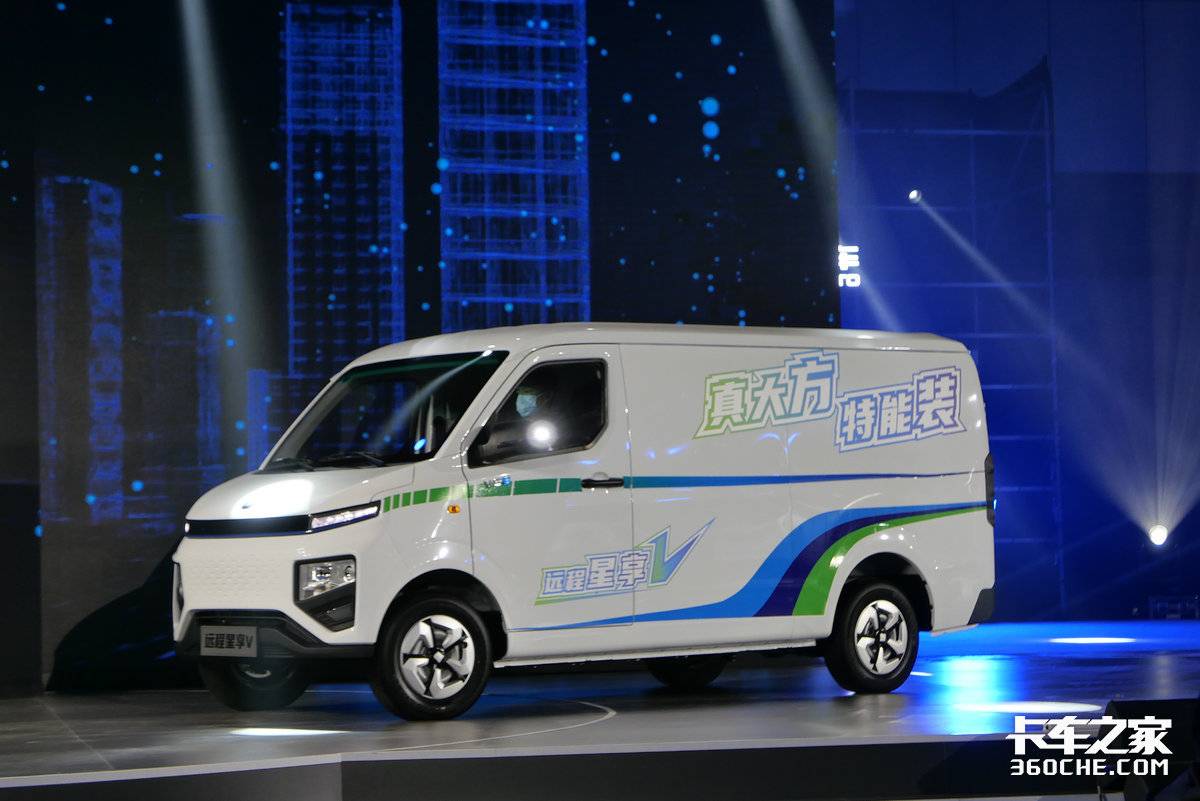
The remote star enjoys the V6E, which is very avant-garde and sci-fi, and has a strong sense of design. White painting with the work of the whole vehicle obviously feels the hard work of the work. As a pure electric vehicle, the air intake grille of the remote Star Enjoy V6E is replaced by a closed front face. The shape of lattice is very fashionable and young, and it can effectively reduce the wind resistance of vehicles and reduce power consumption.

6-square volume with single pedal mode Star Enjoy V Interior is very Nordic.

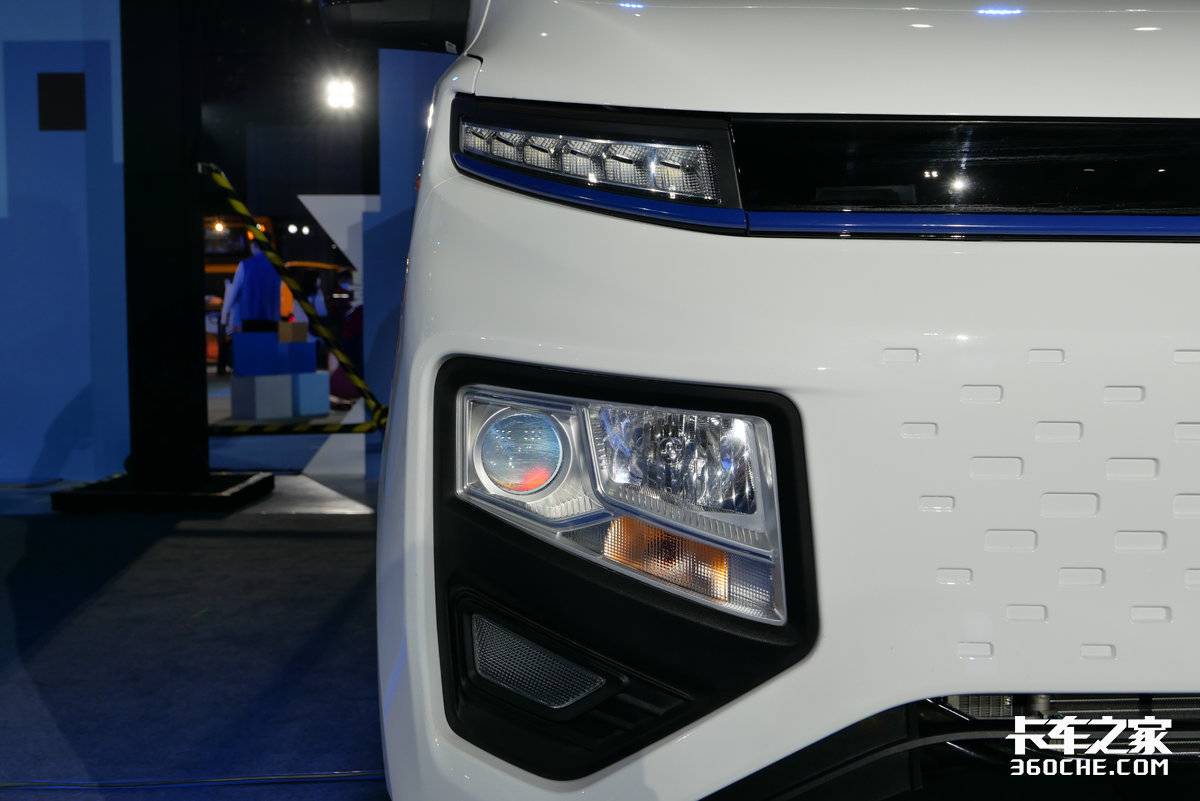
Split headlights further enhance the gas field and technological elements of the whole vehicle, making Star Enjoy V more different from ordinary trucks. The main lighting of Star Enjoy V is equipped with rare lenses of the same level, and combined with halogen light, the lighting effect of driving at night is also very good.

In terms of chassis configuration, the remote satellite enjoys the permanent magnet synchronization provided by V5E and V6E, with the maximum output power of 82 HP and the maximum torque of 220 Nm. It is worth mentioning that in order to ensure the long-term stable operation of the vehicle, the motor is cooled by water cooling to ensure the stability under extreme working conditions.

The biggest advantage of new energy vehicles is that they can recycle energy. It not only prolongs the endurance level, but also greatly reduces the brake wear, which is beneficial in one fell swoop.

The driving motor is Contemporary Amperex Technology Co., Limited’s lithium iron phosphate battery, which has a capacity of 41.93kWh, provides a battery life of more than 260km, and supports fast charging, which can be charged from 20% to 80% within 50 minutes, and can be recharged quickly under high-intensity working conditions. In addition, depending on the vehicle configuration, V5E and V6E also have other brands and capacities of batteries for cardholders to choose from.

Due to the design of the direct-drive motor bridge, the remote Star-Enjoy V5E and V6E can be understood as automatic transmission models. Card users do not need to change gears frequently in daily driving, and at the same time, the dynamic response is fast and driving is easier.

As a new energy vehicle, one of the highlights is that the fuel cost is low enough. For this kind of small-sized, the average daily mileage is about 100-200 kilometers, and a single filling can meet the use needs in one day.

6-square volume with single pedal mode Star Enjoy V Interior is very Nordic.

According to the electricity consumption of 20kWh/ 100km, we travel 200km every day, and the electricity charge is calculated in 1 yuan/kWh. The daily driving cost is only 40 yuan.

Compared with similar gasoline, the 8 yuan/liter of No.92 gasoline is now the driving cost of 160 yuan, which is much higher than that of new energy vehicles.

At the present stage of high oil prices and low freight rates, saving more than 100 yuan of oil money every day is an extra income of 3,000 yuan a month.

Due to the design of direct-drive motor bridge, this remote Star-Enjoy V6E can be understood as an automatic transmission model, which makes it easier for card users to drive everyday, and also has the advantages of fast dynamic response and small size.

6-square volume with single pedal mode Star Enjoy V Interior is very Nordic.

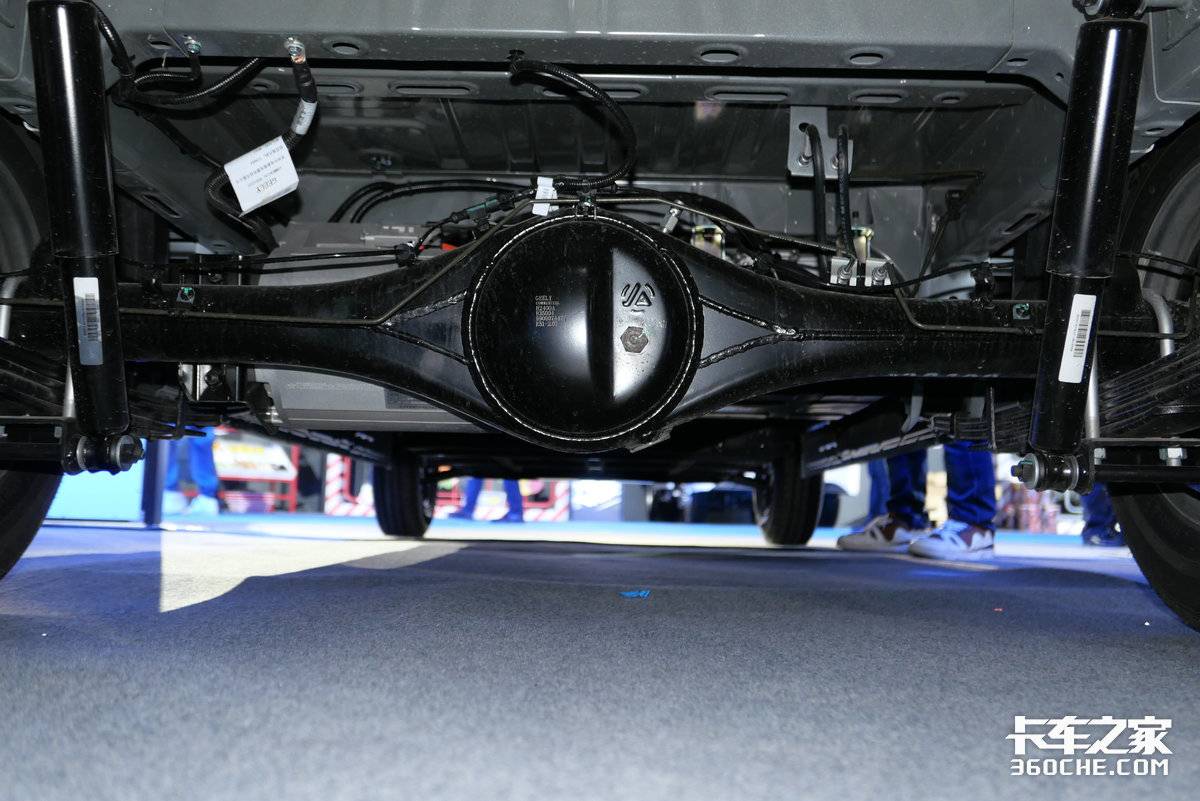
It is worth mentioning that in the design of the rear axle, Xingxiang V adopts double-row tapered roller bearing structure, which improves the bearing capacity by 10% compared with single-row bearings in the industry. The design load of the whole vehicle can reach 1.5T, which is 200kg more than that of the same class products.

The whole interior of the remote satellite enjoyment V5E and V6E can be said to be extremely simple, but it does not lose storage space.

6-square volume with single pedal mode Star Enjoy V Interior is very Nordic.

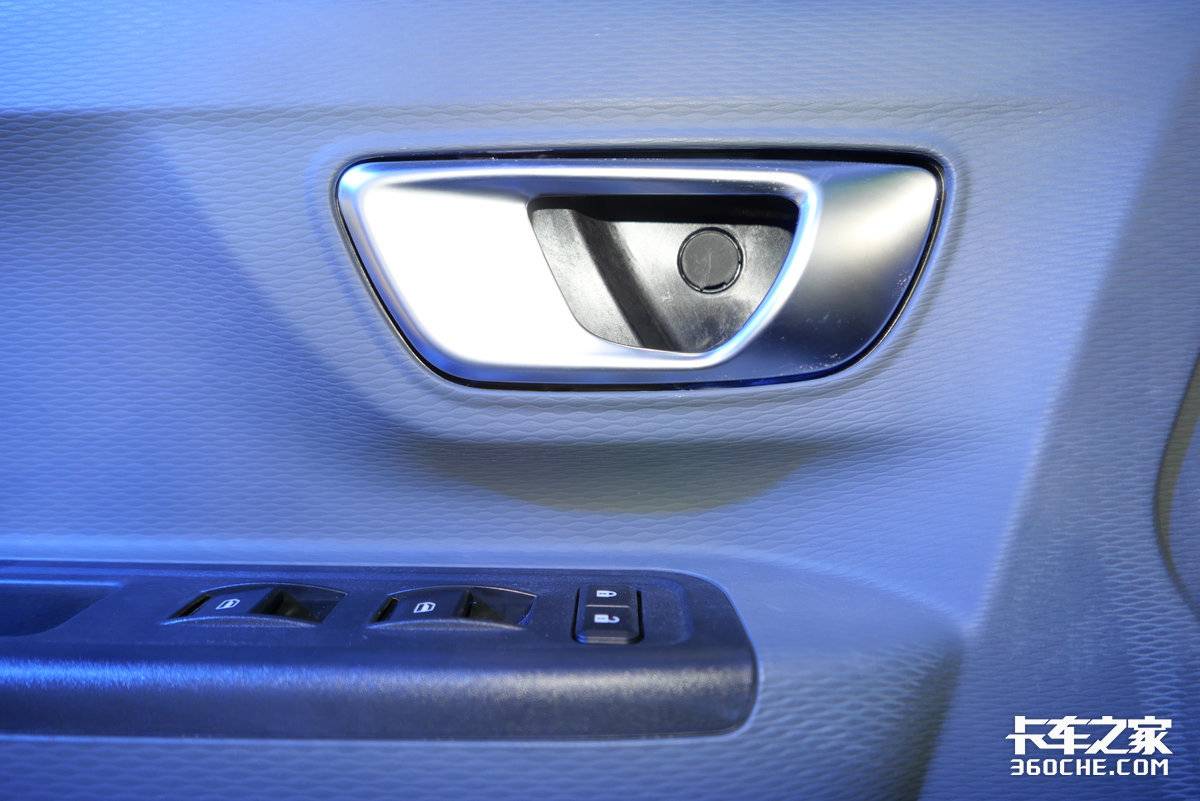
Look at this doorknob, which looks like the doorknob of my brother. It is not only comfortable enough to feel, but also extremely generous in shape.

6-square volume with single pedal mode Star Enjoy V Interior is very Nordic.

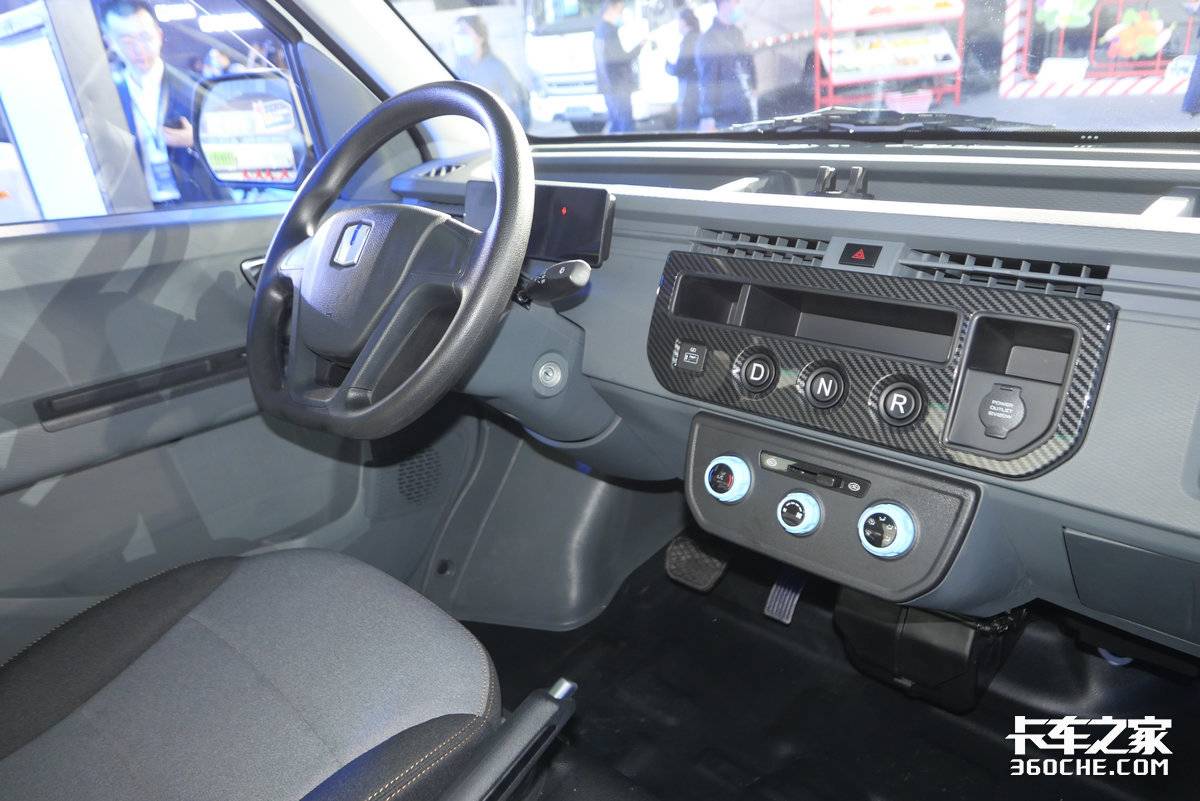
Since the acquisition of Volvo, Geely has paid more attention to health and environmental protection. Xingxiang V interior uses many environmentally friendly materials. At the same time, in terms of modeling and style, carbon fiber water transfer texture is also used, which is a Nordic minimalist style. Personally, I like this style very much. It’s beautiful, easy to manage and practical.

6-square volume with single pedal mode Star Enjoy V Interior is very Nordic.

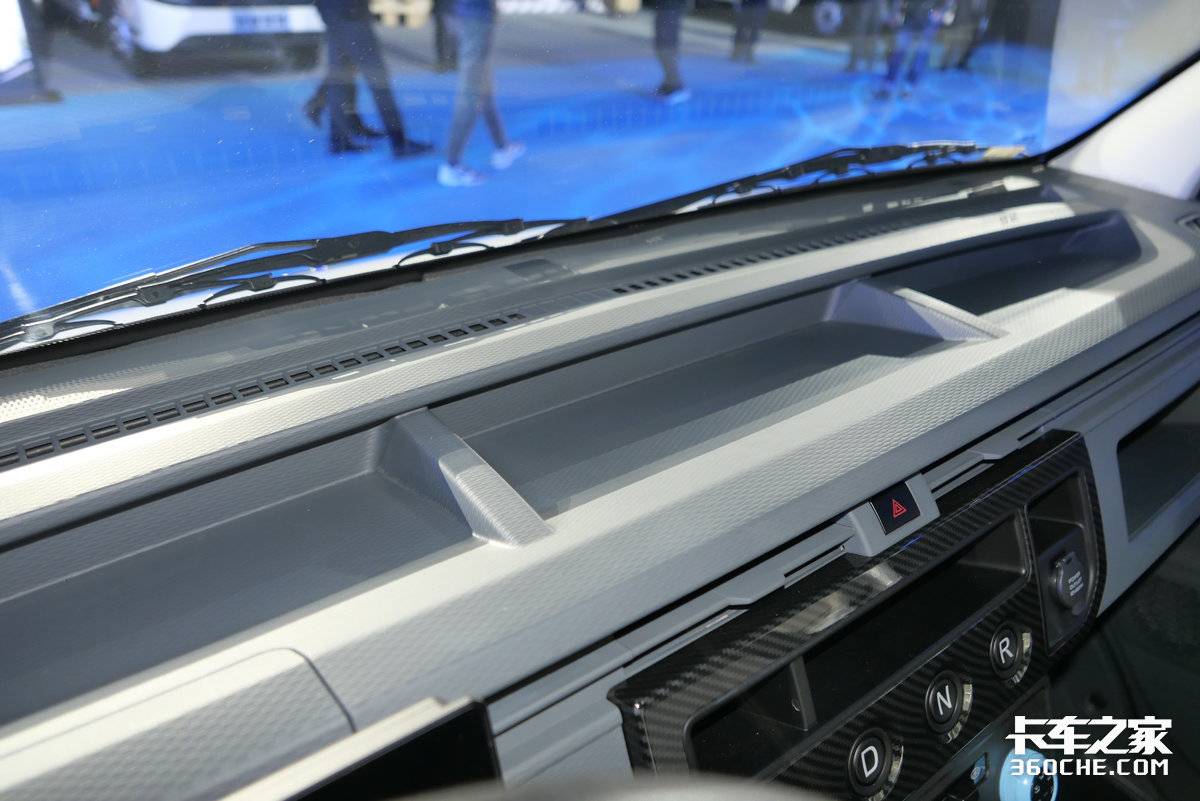
When it comes to practicality, there are 13 storage compartments in the Star V, which is 20% more than that of the same class. The upper part of the instrument panel is designed to store things in different areas, and small tickets, high-speed pass cards, bills and certificates can all be easily stored.

6-square volume with single pedal mode Star Enjoy V Interior is very Nordic.

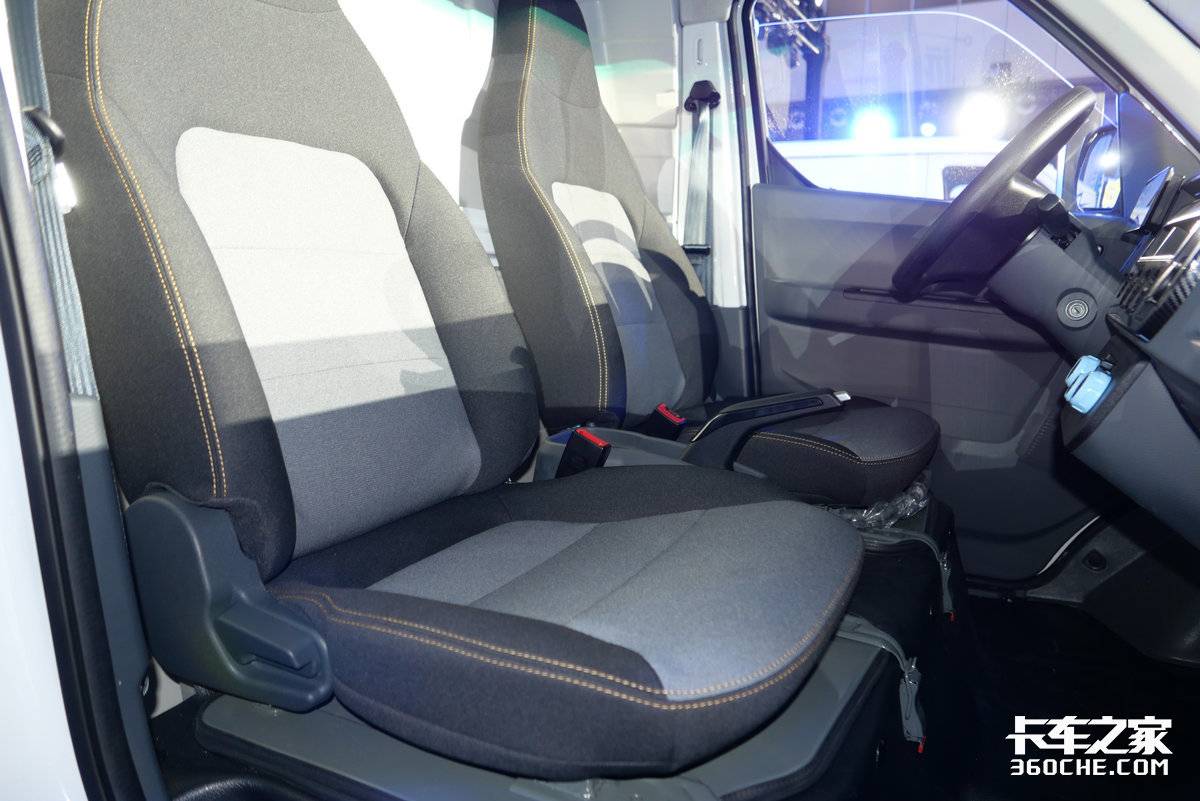
In order to make the driver have a better ride experience, the width of the seat cushion of the Star V driver reaches 500mm, and my weight of 90 kg is very comfortable to sit on. Drivers driving for a long time will also greatly reduce fatigue.

6-square volume with single pedal mode Star Enjoy V Interior is very Nordic.

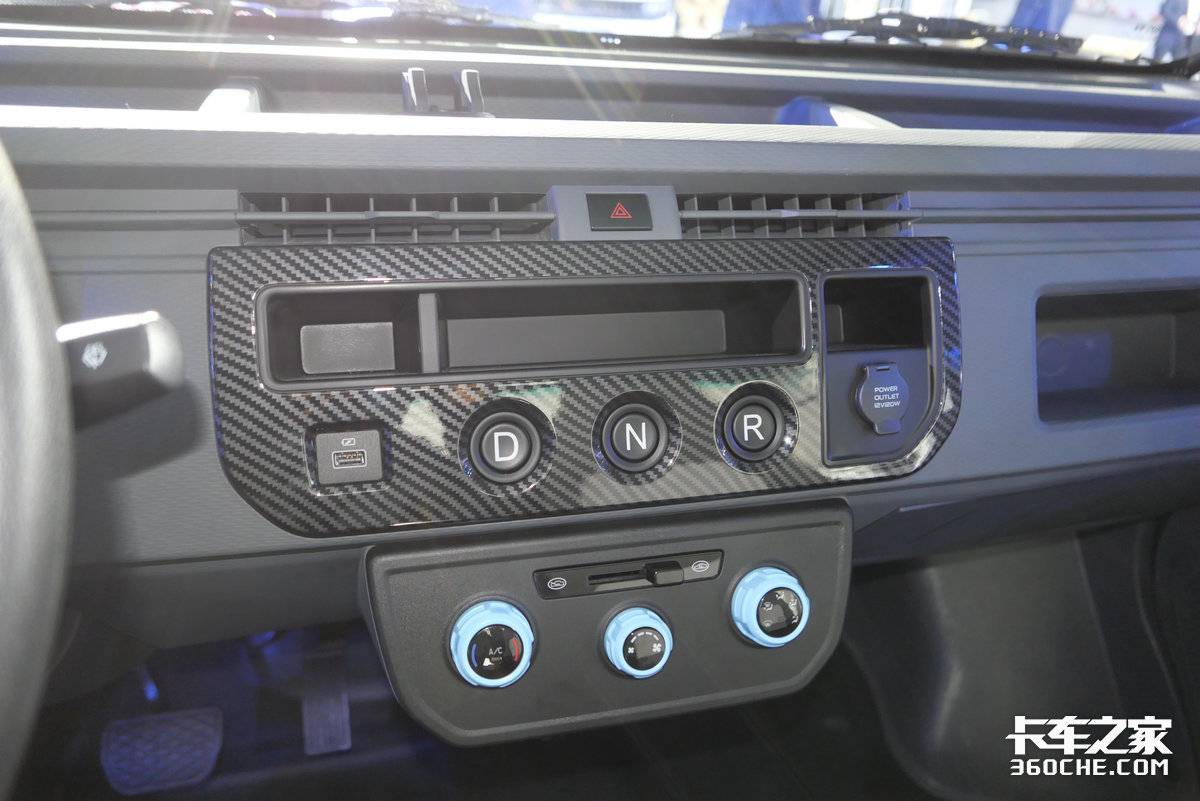
The center console area is very distinctive, and the first key shift arrangement in the industry is here. Shifting gears is clear at a glance, which was only available on passenger cars before.

●  Postscript

With a width of 1730mm, Xingxiang V can easily enter and exit the old community, and the height of less than 2 meters can also enter and exit most of the basements. 6 cubic meters is very convenient for carrying small goods, supermarket delivery, express delivery, etc., and the price of 89,600 yuan is also very cost-effective, and it is not limited at the same time! At present, Star Enjoy V has just been listed, and there are three big gifts for purchase. Card friends who want to buy a car in the near future may wish to consider it. (Text/Figure Zhu Pengfei)

Shenzhen Xingtu Lanyue price reduction news! The reserve price 175,900, the discount waits for no one

[Autohome Shenzhen Discount Promotion Channel] brings a great opportunity to buy a car not to be missed for the majority of fans in Shenzhen! At present, Xingtu Lanyue is conducting an unprecedented promotion, which can enjoy a car purchase subsidy of up to 18,000 yuan. The minimum starting price has been reduced to 175,900 yuan, which undoubtedly provides car buyers with a very attractive car purchase option. Friends who want to seize this car purchase opportunity, be sure to click "Chatty Car Price" in the quotation form to get higher preferential treatment. Don’t miss this rare opportunity, act now!

深圳星途揽月降价消息!底价17.59万,优惠不等人

The exterior design of Xingtu Lanyue combines modernity and power, and the front face part highlights the atmosphere and movement. Its unique air intake grille adopts a large area of chrome decoration, which is like a bright star, which complements the sharp headlights on both sides, showing the perfect combination of technology and luxury. The overall body line is smooth and full of power, creating an aura of a high-end SUV, which brings a strong visual impact to consumers.

The side design of Xingtu Luoyue shows an elegant and powerful profile, and the body size reaches 4970mm x 1940mm x 1792mm, giving it a spacious interior space and a solid and solid appearance. The 2900mm wheelbase ensures the stability of the body, resulting in a front and rear wheelbase of 1644mm, which further enhances the driving balance. The tire size is 245/50 R20, which not only gives the vehicle a solid grip, but also exudes a delicate sense of detail in the wheel style design, creating a luxurious and dynamic visual effect as a whole.

深圳星途揽月降价消息!底价17.59万,优惠不等人

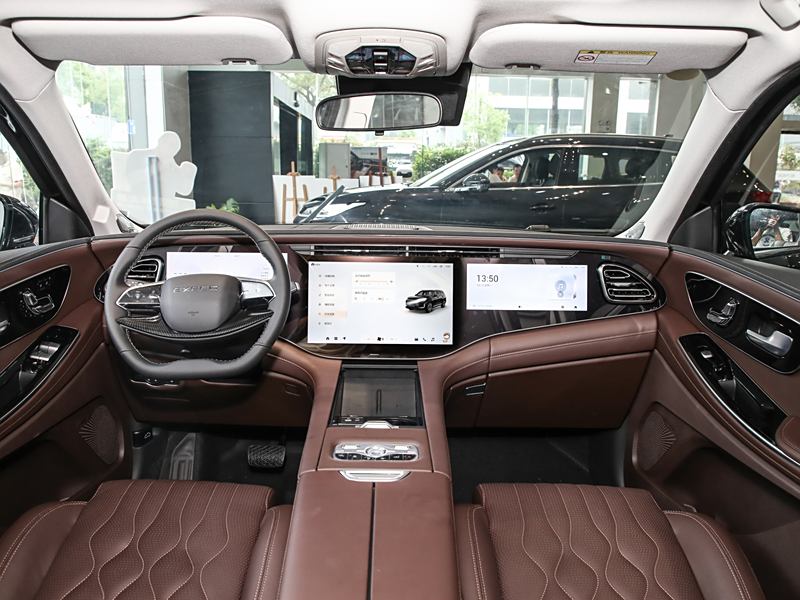
The interior design of Xingtu Lanyue highlights the perfect fusion of luxury and technology. The spacious cockpit uses a high-end leather steering wheel, which not only provides a comfortable grip, but also supports manual up and down and front and rear adjustment to adapt to the needs of different drivers. The core of the center console is a large 15.6-inch screen, equipped with an advanced automatic speech recognition control system, which is easy to operate and can control functions such as multimedia, navigation, telephone, air conditioning and windows. USB and Type-C interfaces are reasonably distributed to meet the multi-device connection needs of passengers. The front row is even equipped with wireless charging function of mobile phones, which enhances the convenience.

In terms of seats, Xingtu Lanyue is made of high-grade leather material. The main seat supports front and rear adjustment, backrest adjustment and high and low adjustment, and has heating and ventilation functions. The driver’s seat is also equipped with electric seat memory to ensure a comfortable experience for the driver. The second row of seats can also move back and forth and adjust the backrest to meet the passenger’s riding needs. The rear seat supports proportional reclining, providing a flexible space solution for loading bulky items. The overall interior design takes into account practicality and luxury, bringing a pleasant driving experience to owners and passengers.

深圳星途揽月降价消息!底价17.59万,优惠不等人

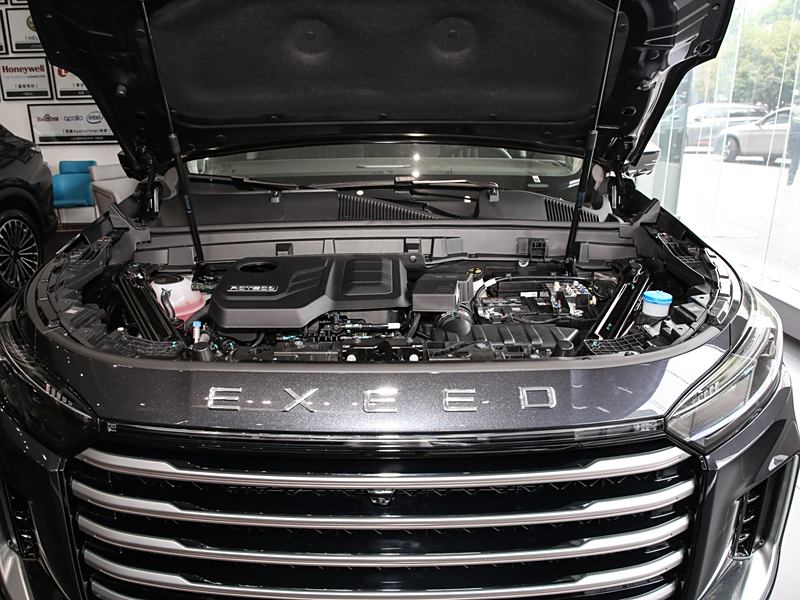
Xingtu Lanyue is equipped with a powerful 2.0T turbocharged engine with a maximum power of 261 horsepower and an output torque of 400 Nm. This high-performance engine is matched with an 8-speed automatic transmission, ensuring smooth power transfer and efficient performance during driving.

Summarizing the owner’s evaluation, Xingtu Lanyue has won praise for its domineering appearance and strong power. The owner expressed satisfaction with the handling and stability of the vehicle, emphasizing the sense of peace of mind brought by its safety performance. This model undoubtedly meets his high requirements for driving experience, making him a loyal fan of Xingtu Lanyue.

Mercedes-Benz GLE Shanghai hot promotion! Lowest offer 487,800! Only this time

In [Easy Car Shanghai Local Auto Market Discount Promotion Channel], we have sorted out the ongoing
Promotions. As a much-talked-about model, the Mercedes-Benz GLE is currently offering amazing discounts. The highest discount can even reach 212,000. The minimum starting price is only 487,800. You can get a larger discount by clicking the "Inquire" button in the quotation form. If you are looking for a practical and affordable model, you may wish to find out about the discounts of the Mercedes-Benz GLE.

First of all, from the appearance point of view, the Mercedes-Benz GLE front shape is relatively tough, using a three-frame net, which looks very sporty. Coupled with the fashionable and generous headlights, the design is relatively sharp. The car is equipped with LED daytime running lights, headlights height adjustment, automatic opening and closing, adaptive far and near light, automatic steering, delayed closing, etc. To the side of the body, the body size of the car is 4927MM*2018MM*1782MM, the car adopts round and lovely lines, the side circumference looks very avant-garde, with large-sized thick-walled tires, smooth lines run through the entire side of the car. Looking back, the rear of the car looks more individual, the tail lights are very fashionable and atmospheric, and the exhaust pipe with unique shape is very cool.

In the Mercedes-Benz GLE, the interior of the Mercedes-Benz GLE looks very avant-garde and reflects the sense of design. The overall shape of the car’s three-spoke steering wheel is very good, and it is made of genuine leather, giving people a good grip experience. Take a look at the central control, the car is equipped with a capable touch LCD central control screen, which makes the interior design quite layered and calm. The dashboard and seats also feel good. Let’s take a look. The dashboard design is remarkable, and the design is relatively cold. The car uses imitation leather seats, which are wide and thick, and are very comfortable to ride.

The overall space performance of the Mercedes-Benz GLE is indeed very good, both the ride and the storage space are very spacious and comfortable. At the same time, the power of the car is also very strong, accelerating rapidly, giving the driver the ultimate driving experience. In addition, the appearance design of the Mercedes-Benz GLE is also very attractive, with smooth and elegant lines, which leaves a deep impression. Overall, the Mercedes-Benz GLE is a luxury SUV with high cost performance, which is worth buying and owning by consumers.

Media: The controversy of Meicheng mooncakes is not over, and there is also a problem with the mooncakes brought by "Walking with Hui"?

Just as "Crazy Little Brother Yang" was making a lot of noise because of the suspected false propaganda of selling "Hong Kong Meicheng Mooncakes" in the live stream, the controversy about the moon cakes in the live stream continued to ferment. On September 18, some netizens broke the news to reporters that the Macau Portuguese Mooncakes sold in the live stream of "Walking with Hui" were also suspected of having quality problems.

According to the reporter’s understanding, the previously recommended one in the live stream of "Walking with Hui" is called "Macau Portuguese Kee Liuxin Cream Mooncake" sold in the Douyin flagship store of "Portuguese Kee Food Flagship Store", priced at 108 yuan per box. The product packaging shows that the producer of this mooncake is "Macau Portuguese Kee Food Co., Ltd.", and the manufacturer is "Zhuhai Portuguese Kee Food Co., Ltd.", and the origin is in Zhuhai, Guangdong.

However, it is worth noting that according to data from platforms such as Qichacha and Qixinbao, "Macau Portuguese Kee Foods Co., Ltd. is registered in Hong Kong. Although its status is" still registered ", it has not only been" registered revoked ", but also applied for" dormant activity "status on May 31, 2024. According to Article 327A of the Hong Kong Companies Ordinance, a company can decide to conduct a dormant activity through a special resolution, but one of the conditions for the dormant activity is that" the company cannot continue to operate or temporarily suspend operations. "

Through relevant information, it can be seen that the producer of the "Macau Portuguese Keeping Heart Milk Mooncake" recommended by the live stream of "Walking with Hui" in September this year has stopped operating in May this year, which has also caused many consumers to worry about the quality assurance of this product.

According to the reporter’s understanding, "Macau Portuguese Kee Liuxin Milk Yellow Mooncake" products are not only sold through the live stream of "Walking with Hui", but also sold in multiple live stream rooms such as "Make a Friend".

Shenzhen 8000 Didi drivers were "banned" Didi responded that it was a routine rectification

  The Beijing Times reported that "Hello master, because you violated the service red line, you have been released from cooperation by the system." Recently, some drivers registered with Didi Chuxing in Shenzhen received a text message informing them that they had been "banned" and needed to re-examine their information. It is understood that more than 8,000 drivers have been "banned" this time. Previously, a female teacher in Shenzhen was killed while riding Didi Hitch, alleged offenders forged license plates, and security bugs exposed by Didi’s platform attracted attention.

  Yesterday, in response to the driver’s ban, Didi responded that the Didi platform has always strictly managed drivers, and various regions and every once in a while will remind and rectify drivers with abnormal driver license (vehicle) information on the platform, as well as drivers with service quality problems on the platform. Didi said that this is not a ban, because drivers can withdraw cash normally. If the driver who receives this text message has any objection, he can bring the driving book and driving book, and drive the registered vehicle to the Didi Owners Club to re-review the information, and can continue to serve on the platform.

  > > Online car-hailing problem

  Frequent incidents of passenger rights violations

  Recently, Shenzhen police reported that Zhong, a 24-year-old woman in Nanshan, Shenzhen, was robbed and killed by the driver after riding an online taxi. It was later confirmed that the victim was riding a ride on the Didi platform, and the driver, Pan, registered on the ride platform with his real ID card, driver’s license and driving license (license plate number Guangdong B6S8N3), but used a temporary forged license plate (Guangdong C2S8N3) at the time of the crime. At present, the alleged offender Pan has been arrested and brought to justice; last month, media exposed that many passengers were harassed or even cursed by phone and text messages after giving bad comments to the driver or complaining to the platform; on May 1, four girls in Haikou were riding an express train when the driver masturbated while driving, and the driver involved has been missing.

  Thousands of former drivers were identified

  At the end of March this year, according to the Shenzhen Municipal Transportation Commission, there is a widespread problem of lax checks on the recruitment of online car-hailing drivers in Shenzhen. According to the investigation of the Shenzhen public security department, some online car-hailing drivers have problems such as drug abuse, mental illness, and violation of law and discipline. Some "drug drivers" who have had their driver’s licenses cancelled have registered as online car-hailing drivers with their cancelled driver’s licenses.

  During this investigation, 1,425 drug addicts, 1 mental patient who caused an accident, and 1,661 criminal offenders were found among Shenzhen’s online car-hailing drivers.

  It is difficult to hold passengers accountable for damage to their rights

  From a legal perspective, on an online ride-hailing platform, it is difficult to hold the platform accountable for legal disputes between passengers and drivers.

  The platform is only the publisher of information, and there is no labor relationship or labor relationship with the driver. The law does not stipulate that the platform is responsible for the problems caused by the driver in the process of receiving orders. But there are exceptions, that is, the drivers hired by the platform itself.

  There is no legal entry threshold for drivers

  Since the relevant regulations on the management of online car-hailing are still blank, the current access conditions for online car-hailing drivers are still stipulated by the platform itself. Didi Hitch can be registered as long as it is a private car that meets the national annual review, and the required materials are only a driver’s license and a driving license. The vehicles required by Yidao are within 3 years, the driver is within 45 years old, and the driving experience is more than 5 years. There is a local license plate. (Hao Shaoying, reporter from The Surging Beijing Times)

Didi has finally made a profit, but why does it continue to spend money on autonomous driving?

Didi is entering a new stage of development of "breaking out of the cocoon and becoming a butterfly".

The latest quarterly earnings report from Didi shows that Didi has achieved its best performance in history. Specifically, while its business and revenue continued to grow and reached a record high, it also ushered in a bright harvest on the financial level: it achieved its first single-quarter profit since delisting from the New York Stock Exchange.

More importantly, Didi’s business structure has also further matured. One of the most typical examples is that Didi’s corporate strategy will further "focus on mobility services", according to Cheng Wei, chairperson and CEO of Didi.

For a travel platform company like Didi, doing something and not doing something is a very challenging business choice. At present, the strategic focus on travel services has pointed to Didi’s "doing something", and Didi’s "doing something" has largely pointed to autonomous driving.

For the current Didi, this is undoubtedly a wise choice.

Towards a rare positive business cycle

From a financial standpoint, Didi is approaching a business cycle based on a mobility service system like never before.

According to Didi’s official financial report for the third quarter of 2023 released on November 13, Didi’s revenue in the third quarter was 51.40 billion yuan, reaching a new historical high and growing by 25% year-on-year.

Among them, the China Mobility business segment achieved revenue of 46.649 billion yuan, an increase of 26.6% year-on-year; the International business segment achieved revenue of 2.034 billion yuan, an increase of 28% year-on-year.

Judging from the order situation, Didi’s order volume in the three quarters continued the growth trend of the previous two quarters as a whole, and the total order volume of the core platform reached 3.579 billion orders, an increase of 34% year-on-year. Among them, the total order volume of China’s travel business was 2.878 billion orders, an increase of 32% year-on-year; the total order volume of international business was 701 million orders, an increase of 43% year-on-year. In this way, the average daily order volume of China’s travel in the third quarter reached 31.30 million orders, breaking through the historical peak of a single quarter.

For this order volume performance, Didi said that around the summer, concerts and other popular travel scenarios, Didi continued to up the ante refined operation in the third quarter, issuing multiple taxi benefits to users, and further driving travel demand growth. In the third quarter, the total transaction volume (GTV) of Didi’s core platform was 91.50 billion yuan, an increase of 37% year-on-year. Among them, the total transaction volume of China’s travel was 72.50 billion yuan, an increase of 33% year-on-year; the total transaction volume of international business was 19 billion yuan, an increase of 52% year-on-year.

Of course, in order to promote the expansion of the overall revenue plate, Didi’s revenue costs are also expanding.

According to the financial report data, Didi’s cost in the third quarter of 2023 was 43.40 billion yuan, accounting for 84.4% of revenue; the cost in the same period of the previous year was 33.70 billion yuan, accounting for 81.9% of revenue. In this regard, Didi explained in the financial report that the increase in revenue costs as a percentage of revenue was mainly due to the increase in costs related to China’s online car-hailing business.

But the good thing is that Didi has made efforts to improve operational efficiency.

Specifically, Didi’s sales and marketing expenses in Q3 2023 were 2.80 billion yuan, accounting for 5.4% of revenue, and 6.1% in the same period last year. At the same time, Didi’s management fee in the third quarter of 2023 was 2.20 billion yuan, and the same period last year was 2.30 billion yuan. The management fee rate decreased from 5.5% in the same period last year to 4.2%.

It can be seen that when the proportion of sales and marketing expenses and management fees is decreasing, it can be seen that Didi’s operational efficiency is indeed improving.

Let’s take a look at the profitability again.

Didi’s adjusted EBITA loss in the third quarter was 315 million yuan, compared with 308 million yuan in the same period last year.

Among them, Didi’s adjusted EBITA from China’s travel business in Q3 2023 was 1.47 billion yuan, down 26.1% from 1.988 billion yuan in the same period last year; Didi’s adjusted EBITA from international business travel in Q3 2023 was – 795 million yuan, down 9.2% from the same period last year – 876 million yuan. Adjusted EBITA loss for other business segments was 990 million yuan, down 30.3% year-on-year.

It is worth mentioning that Didi’s ROI recorded in Q3 2023 was 1.10 billion yuan, and the ROI in the same period of the previous year was 200 million yuan. Didi’s ROI in 2022 is mainly related to the fair value gain of the company’s investment in Grab, while Didi’s ROI in 2023 is mainly related to the unrealized gain arising from the spin-off of its subsidiary engaged in autonomous trucking.

From the final results, according to GAAP standards, Didi’s net profit in the third quarter was 376 million yuan, compared with a net loss of 1.764 billion yuan in the same period last year.

In addition, as of September 30, 2023, Didi’s cash and cash equivalents, restricted funds and wealth management investment balances were 54.60 billion yuan, an increase from 48.80 billion yuan as of December 31, 2022. At the same time, Didi disclosed that it will carry out a repurchase plan of no more than 1 billion US dollars in the next 24 months.

Overall, on the basis of the expansion of the overall revenue plate, Didi has continuously improved operational efficiency, reduced the scope of loss-making business, and achieved overall profitability under GAAP standards through investment and other means. Under the new business rhythm, Didi has shown a positive trend as a whole.

From the perspective of its overall development process, this time, Didi has achieved its best performance in history since its inception.

The smart choice for Didi’s strategy: Focus

Didi’s financial performance in the third quarter of this year has actually been fully and accurately explained in the evaluation of Cheng Wei, chairperson and CEO of Didi Chuxing.

Cheng Wei said that thanks to the continuous recovery of domestic travel demand, Didi’s various businesses continued to grow steadily in the third quarter. Objectively speaking, the reason why Didi Chuxing was able to achieve more than 25% revenue and order growth is indeed closely related to the rapid growth of travel demand after the end of the epidemic. This factor can be regarded as a favorable external condition for Didi’s development.

However, from the perspective of Didi itself, Cheng Wei’s next sentence revealed the secret of Didi’s ability to grasp the growth of technology, that is, "the company’s strategy further focuses on mobility services". If the core keyword is extracted, it is "focus on mobility services".

Indeed, focusing has become the choice that Didi Chuxing, a travel service platform company rooted in China, has made in the past few years.

A very typical example is that as early as 2020 and the first half of 2021, Didi was also frantically involved in the battle of community group buying and sank the sand, but in the following year or two, Didi actively or passively gave up this business sector. Now, it has completely withdrawn from this muddy water.

Even just from the third quarter of this year, Didi has carried out its strategy through a number of actions in "focusing on mobility services".

Among them, the one that has attracted the most attention from the outside world is undoubtedly the transfer of the smart electric vehicle project to Xiaopeng in August this year.

More specifically, at the end of August this year, Didi Chuxing announced a strategic cooperation with XPeng Motors to sell its previous electric vehicle project-related assets and R & D capabilities to XPeng Motors, which itself owns shares in XPeng Motors. In addition, the two sides also cooperate on automobile operation, brand marketing, financial insurance services, charging facilities, international markets, etc.

For Didi, the cooperation with Xiaopeng is undoubtedly wise. After all, the smart electric vehicle project is a very expensive asset-heavy business. For an Internet company like Didi, the qualification itself is a big issue, not to mention the huge capital and business risks involved.

In essence, the smart electric vehicle business is indeed not what Didi is good at. It is related to Chuanqiang, but it does not belong to the category of "service" at all, so it is essentially different from "travel service". Therefore, Didi chose to cooperate with XPeng Motors to sell the business and obtain shares in XPeng Motors, essentially returning to the asset-light model that it is familiar with and good at.

So the abandonment of the smart electric vehicle project reflects Didi’s "focus" on Chuxing services, which is indeed very sensible.

In addition to its partnership with XPeng Motors, Didi Chuxing’s focus on "mobility services" was also reflected in another partnership announced in the third quarter.

On September 6, Didi’s Didi Car Rental and Heyi Car Rental jointly announced that they have reached a cooperation, and will jointly explore various fields such as vehicle rental, network services, marketing promotion, and new business scenarios to jointly provide users with more value-added and convenient travel services.

In fact, the cooperation between Didi Car Rental and Ehi Car Rental is the first time that Didi Car Rental is directly connected to the domestic head self-operated car rental brand. Users open the Didi Chuxing App and click "Ehi Special Offer" from the "Didi Car Rental" model list page to quickly filter. You can rent vehicles from Ehi 11,000 multiple direct outlets across the country. In this cooperation, the two sides also plan to try new usage scenarios and usage models in the car rental business, and jointly explore new space in the car rental market. For example, more attempts and explorations are made in scenarios such as commuter car rental and instant cross-city car rental to further enhance the user experience.

Obviously, the cooperation with Ehi Car Rental is another important layout for Didi to continuously expand its services around the travel scene and meet the diverse travel needs of users. It should be noted that the attributes of this cooperation itself are still asset-light, and the business itself is completely under the category of "travel services".

Of course, in addition to the above two collaborations, Didi Chuxing’s focus on travel services is also reflected in its many daily operation dynamics in the third quarter, including the launch of "barrier-free travel services for the blind" nationwide, the participation of "Didi public welfare rescue team" in disaster relief work, the upgrading of student rights and interests, the establishment of a freight driver ecological service committee in the freight business, and the launch of 1 billion subsidies during the double holiday.

These are all manifestations of Didi’s "focus on mobility services".

It is worth mentioning that it is precisely because of Didi’s continued layout in the travel service that in September this year, Didi Chuxing also successfully ranked 14th in the "2023 China Top 100 Service Private Enterprises" list released by the All-China Federation of Industry and Commerce, which is undoubtedly a great affirmation of Didi as a travel service enterprise.

Autonomous driving, supporting an imaginative space

There is no doubt that the core corporate strategy of "focusing on mobility services" has strongly supported Didi’s "present" in business and financial aspects; at the same time, as an Internet technology company, Didi also needs to build a "future" with broad imagination for the market and investors.

It is clear that this "future" of Didi is built on autonomous driving.

In fact, if we look at the timeline of setting up a team in 2016, Didi’s autonomous driving business is actually the business that Didi has the longest and most committed in many businesses, and it is also the business that best reflects Didi’s technological attributes as a travel service company.

At present, Didi is also making multi-line deployments in the field of autonomous driving.

One of the most obvious and important lines is undoubtedly the cooperation with GAC Aian for the layout of L4-level driverless taxis.

In fact, as early as May 2021, Didi’s autonomous driving company announced a strategic cooperation with GAC Aian, the purpose of which is a driverless new energy model that can be put into large-scale application. But this cooperation was stranded for a time, and it was not substantially advanced until May 2023. Didi Autonomous Driving Company and GAC Aian New Energy Vehicle joint stock company jointly released the driverless new energy production vehicle project "AIDI plan" and announced that they will establish a joint venture company.

According to the AIDI plan, Didi Autonomous Driving and GAC AEAN will establish a joint venture. The first mass-produced model will be based on GAC AEAN AEP3.0 pure electric platform, Xingling electronic and electrical architecture and multi-fusion perception autonomous driving mass-production technology, equipped with Didi Autonomous Driving L4 urban generalization engine and autonomous driving technology solutions for travel services, to create driverless new energy vehicles. Not only that, the production car will be connected to Didi’s shared travel network in 2025.

In October this year, GAC Capital, a wholly-owned subsidiary of GAC Group, and Guangzhou Development Zone Investment Group announced the establishment of a special project fund jointly funded by the same proportion, investing no more than 149 million US dollars in Didi Autonomous Driving; through this investment, Didi Autonomous Driving will continue to increase investment in technology research and development, accelerate the promotion of product application and open cooperation in the industrial chain.

Therefore, it is obvious that on the road to promoting L4 driverless taxis, Didi’s autonomous driving has been firmly tied to the deep-pocketed GAC Group, relying on Didi’s leading strength in autonomous driving technology and scene data systems.

In addition to Robotaxi, another business breakthrough point for Didi’s autonomous driving is the mass production of new energy heavy trucks at the L4 level.

In fact, at the Guangzhou Auto Show held not long ago, Didi Autonomous Driving showed a front-loading L4 new energy heavy truck. It was jointly launched by Carl Power, an incubator of Didi Autonomous Driving, and Shaanxi Automobile. It is equipped with the hybrid intelligent formation system developed by Carl Power. From a business perspective, it is a hybrid unmanned solution that can empower logistics and transportation scenarios through intelligent driving.

At present, Karl Power has carried out normal testing and operation in North China and Northwest China, providing intelligent transportation in complex scenarios such as short, medium and long-distance, and transporting over 2.50 million tons of bulk goods every year.

It can be said that through the layout of L4-level front-loading mass-produced new energy heavy trucks, Didi’s autonomous driving tentacles have also penetrated into the field of smart logistics from the perspective of human travel needs.

Of course, in addition to cooperation with car companies, Didi is also deploying some core components and technologies in autonomous driving. For example, the three-domain integrated computing platform "ORCA Orca" developed by Didi Autonomous Driving, and the lidar "North BETA" jointly developed by Didi and Beixing, etc. These businesses are essentially intelligent layouts carried out by Didi to achieve L4-level autonomous driving.

From the bottom, Didi’s layout in the field of autonomous driving is still a light asset logic that relies on partners, empowers partners, and connects partners. This is indeed more conducive to Didi from the perspective of Internet platform enterprises to play its own intelligent and shared value without having to bear huge financial exposure.

Of course, overall, Didi’s layout in the field of autonomous driving is still in the investment stage, and to see its actual value in terms of business returns, it may have to wait until 2025 at the earliest.

As a mature enterprise, Didi

In China’s Internet platform enterprises, Didi has always been a special presence.

For example, it was born in the wave of China’s mobile Internet development, and it naturally has its own technological attributes; it has grown up with the continuous feeding and support of multiple capitals, which makes it more necessary to consider the balance between short-term returns and long-term investment at the financial level; but at the same time, the travel track it is in is a highly regulated industry, and safety must be the first red line… This itself is "walking a tightrope of balance".

Such enterprise attributes are destined to make Didi’s development difficult, making it appear to be stumbling.

But now, after a series of setbacks and adjustments, Didi has found its place in the ever-changing industry landscape, focusing on the strategic foundation of "mobility services", and has also found its own development rhythm, taking autonomous driving as the core competitiveness for the future.

Do something, do something. In other words, Didi has finally learned the correct posture of "balancing the tightrope".

Such a Didi, although it is no longer the Didi that seeks crazy expansion and constantly seeks various possibilities, is a more pragmatic, more mature, more stable and more responsible platform enterprise. More importantly, on the track of autonomous driving, it continues to run and intends to build a long-term enough future with a smarter attitude.

If you want to join "AI Business Review – Automotive Industry Exchange Group", you can add WeChat account: AI-Weekly. For business cooperation, you can add WeChat account: 17701856297.